
 Best Offers for You









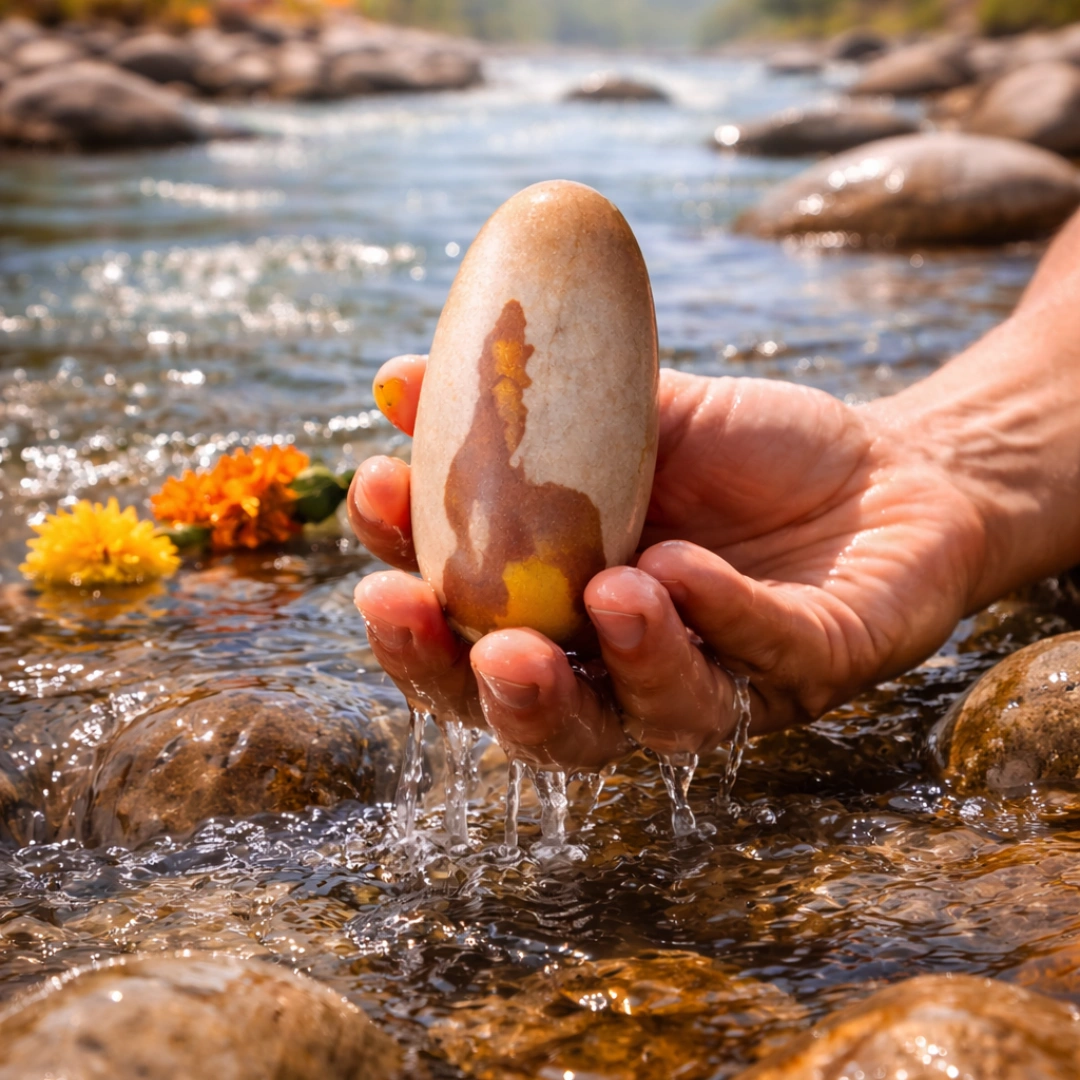
There is a river in Madhya Pradesh that has been called the most sacred river in India by the Shiva Purana. Not the Ganga. Not the Yamuna. The Narmada.
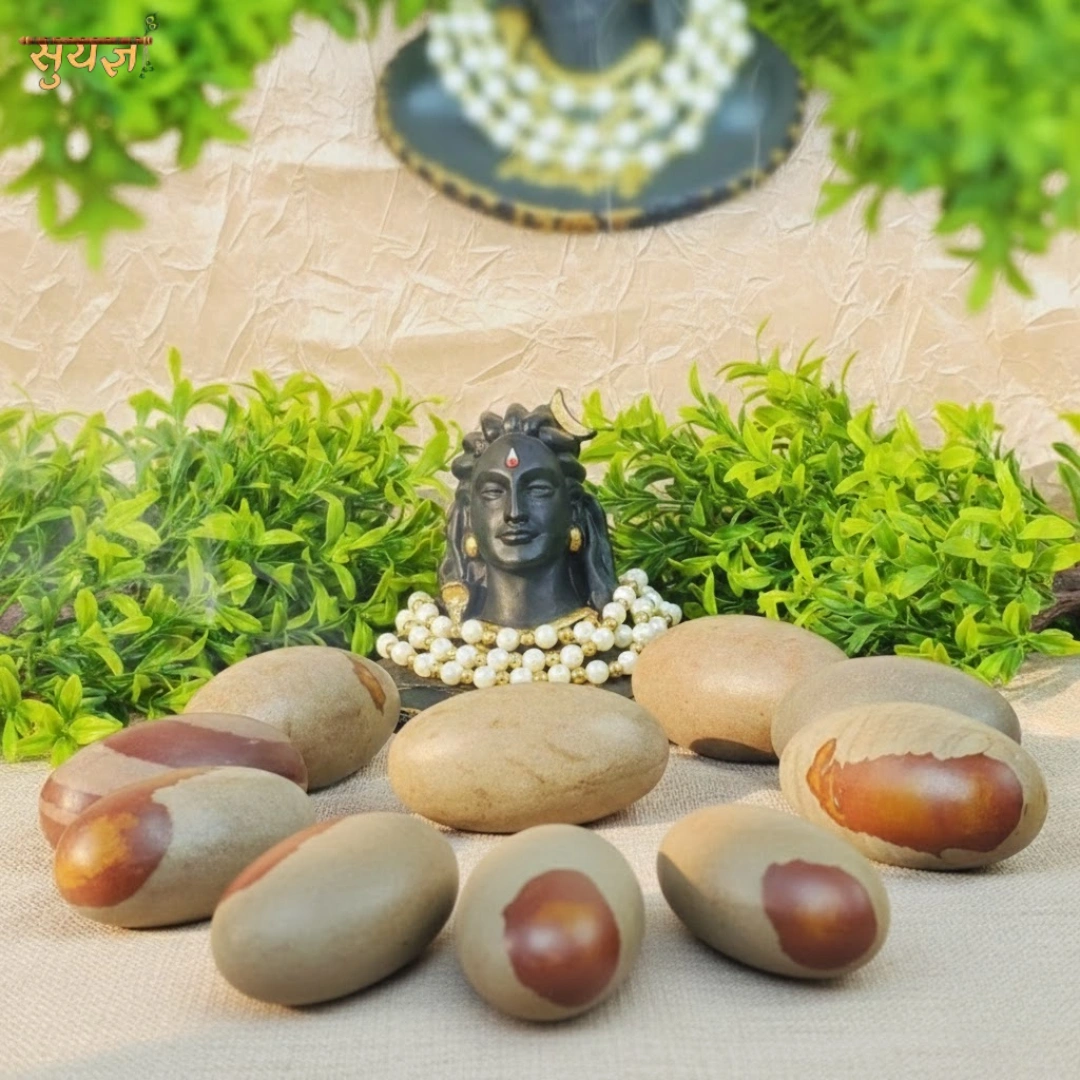
And the reason — at least one of the reasons — is this: every stone that comes from the Narmada river is considered to be a natural Shivling. Not metaphorically. Literally. The Shiva Purana states that while the Ganga purifies when you bathe in it, the Narmada purifies even at the sight of it. And the stones within it — the oval, smooth, naturally marked stones formed over thousands of years by the river's current — are considered to be Swayambhu Shivlings. Self-manifested forms of Lord Shiva.
You do not need a pandit to consecrate this. You do not need Prana Pratishtha. The river already did that work — across millennia.
What Makes the Narmadeshwar Shivling Completely Unique
Most objects of worship require human creation — a sculptor's hands, a craftsman's tools, an artisan's intent. The Narmadeshwar Shivling requires none of that. The River Narmada shaped these stones herself.
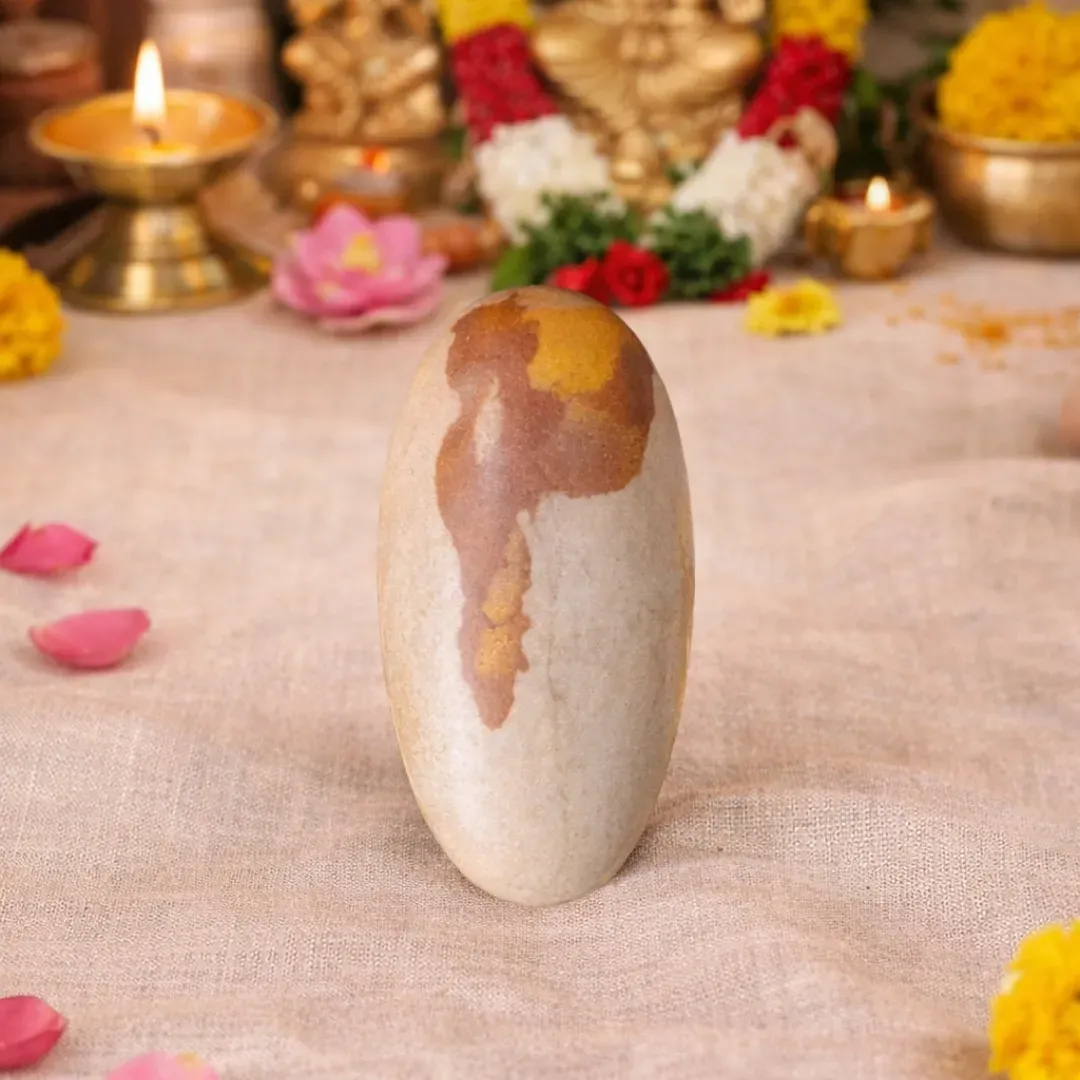
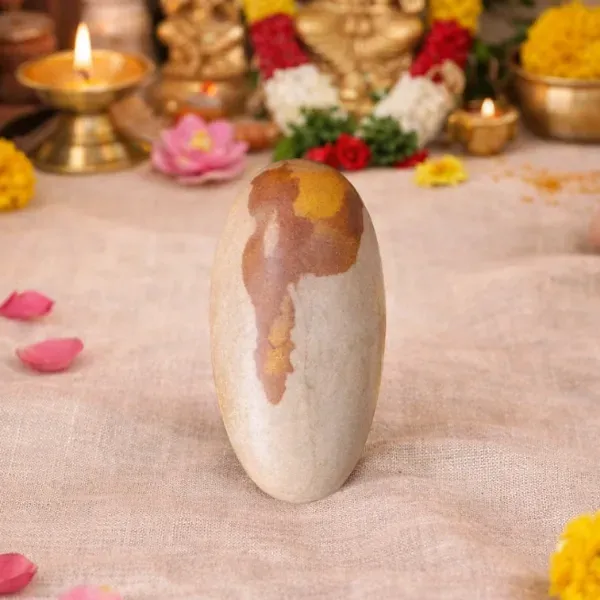
The oval form comes from thousands of years of the river current pushing these stones against each other, smoothing their edges, giving them their distinctive egg-like shape. The shape itself is deeply significant — in Sanskrit, the lingam represents the formless becoming form. The infinite condensed into something you can hold.
And then there is the tilak.
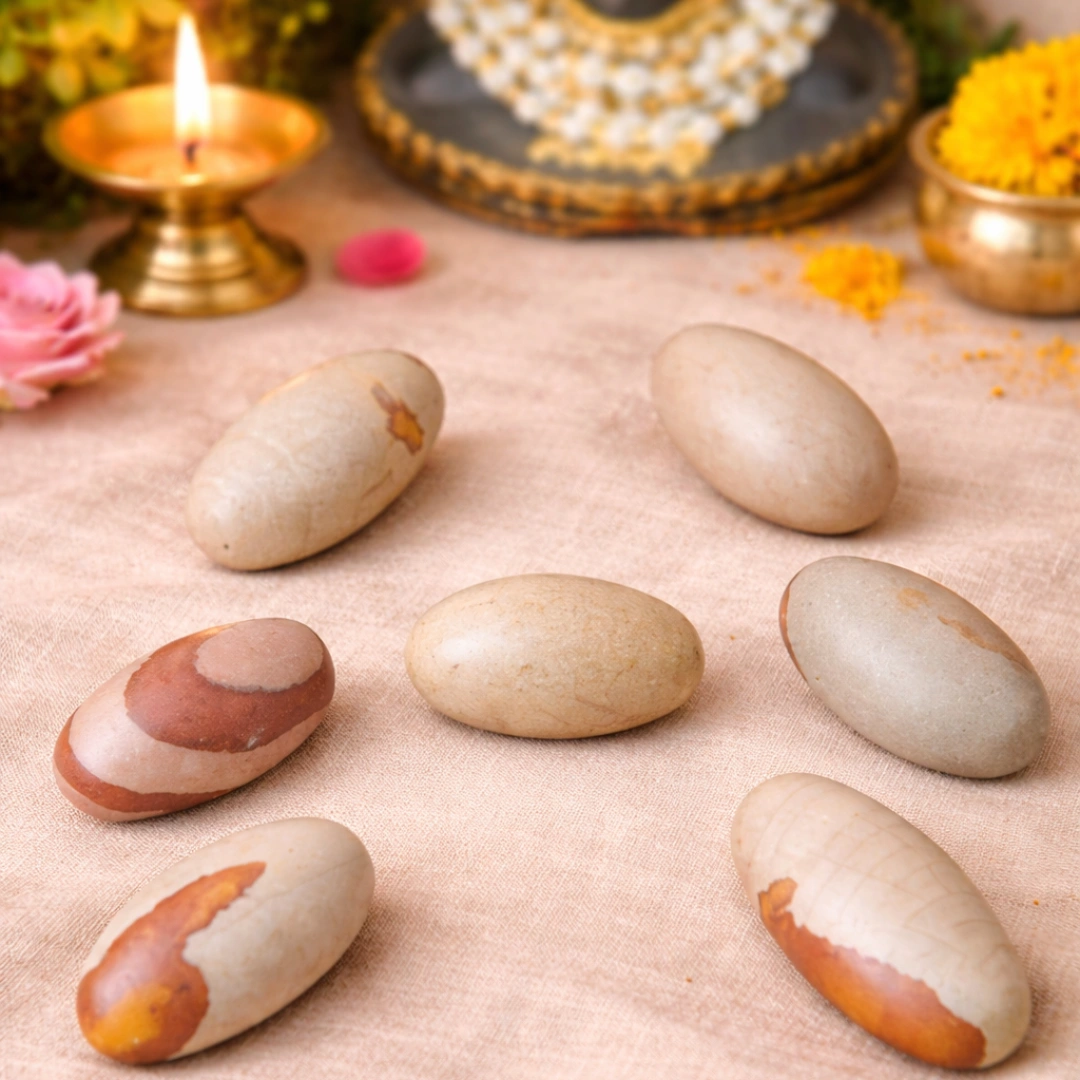
That brown-saffron mark you see on this Shivling — that is not paint. That is not dye. That is iron oxide naturally deposited by the Narmada river water onto the stone surface over an extraordinarily long period of time. The specific shade, the exact shape, the placement — all of it is formed entirely by the river. No two Narmadeshwar Shivlings have the same tilak. No two look exactly alike. The one you receive is the only one like it in the world.
In Hindu tradition, the tilak on a Shivling is considered especially auspicious — it marks the stone as particularly blessed, particularly chosen. When that tilak is natural, formed by the sacred river itself, its significance is considered even greater.
The Shiva Purana on Narmadeshwar Shivling
Ancient texts are not vague about the power of this Shivling. The Shiva Purana explicitly states that the merit of worshipping thousands of ordinary lingas does not equal the merit of worshipping one Narmadeshwar Shivling. This is why for thousands of years, sages, saints, and devotees have specifically sought out these river stones — not man-made idols, not carved marble, but the natural stone from the Narmada.
The text also says something that most sellers do not mention: the Narmadeshwar Shivling does not require Prana Pratishtha — the formal consecration ritual typically needed before installing a deity idol at home. Because it is Swayambhu — self-manifested — it is already a living embodiment of Shiva. You can bring it home, place it in your mandir, begin your puja, and Lord Shiva is already present.
This is not a detail. This is the most important thing to understand about this Shivling.
What Daily Puja of the Narmadeshwar Shivling Does
Across traditions, daily Shivling puja is not just considered devotion — it is considered a complete spiritual practice in itself.
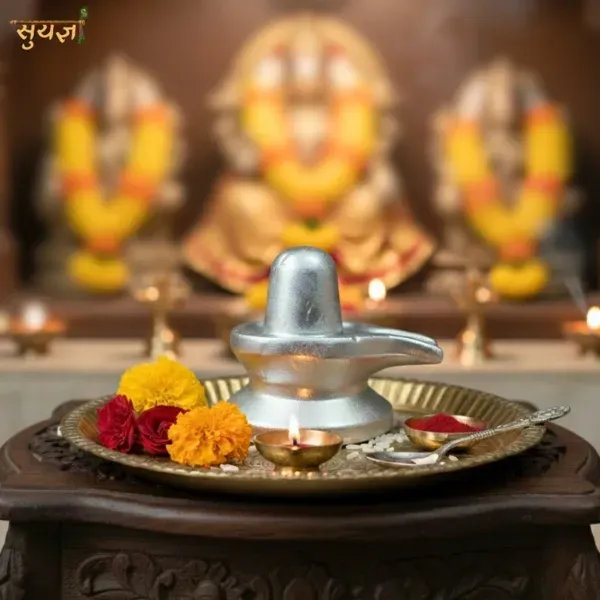
The puja itself is beautifully simple. Offer water — Jal abhishek — every morning. A little milk on auspicious days. Bilva leaves, which are especially sacred to Shiva. A small amount of vibhuti (ash). Light a diya. Chant "Om Namah Shivaya" or the Mahamrityunjay Mantra.
That is the complete practice. No elaborate rituals, no complicated procedures.
What people who do this daily consistently report: a quieter home. Less conflict, less tension in the family. A sense that the space has changed — lighter, calmer, more settled. The Shiva Purana attributes specific benefits — removal of planetary afflictions, relief from Shani Sade Sati, protection of the home, harmony between husband and wife, general prosperity and peace.
Whether you approach this as deep faith or as a daily discipline that centers you — the practice works.
Where to Place It and How to Care for It
Direction: North or East direction of your home mandir is ideal. North is considered Shiva's direction — the direction of Mount Kailash. East catches the morning light, which is auspicious for puja.
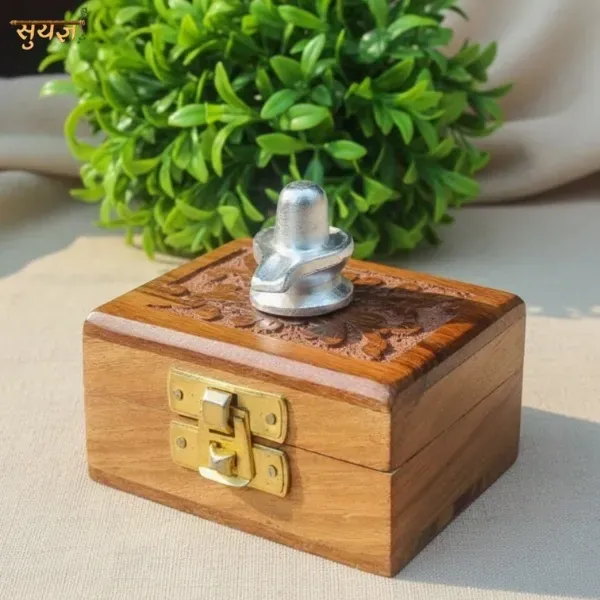
Size: The Shiva Purana mentions that the Shivling installed at home should not be larger than the size of your thumb. Smaller Shivlings are considered appropriate for home worship. Larger ones are for temples. Choose a size that feels right for your space — the reverence matters more than the dimensions.
Daily care: Offer fresh water or milk each morning. Wipe gently with a soft cloth. Do not use harsh chemicals or soaps on the stone — the natural surface is part of what makes it sacred. Keep it elevated, not placed directly on the floor.
Abhishek: On Mondays and especially during Shravan Maas, perform a full abhishek — pouring water, milk, honey, and curd over the Shivling while chanting the Mahamrityunjay Mantra. This is considered especially powerful.
Explore the complete Pooja Items collection at Suyagya for Shivlings, Yantras, and other sacred items for your home mandir. For Shiva-focused spiritual practice, the 5 Mukhi Rudraksha Jaap Mala pairs naturally with daily Shivling puja.
Use Suyagya's Astro AI to find out which puja or remedy is best suited for your specific kundali — available directly on the website.