 Best Offers for You



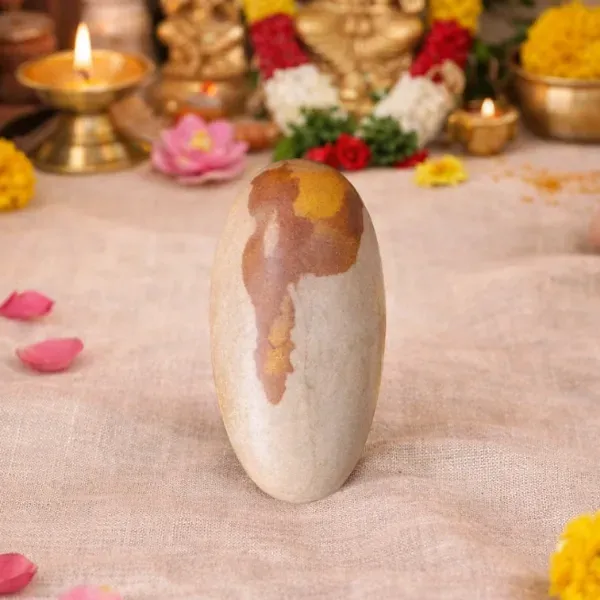
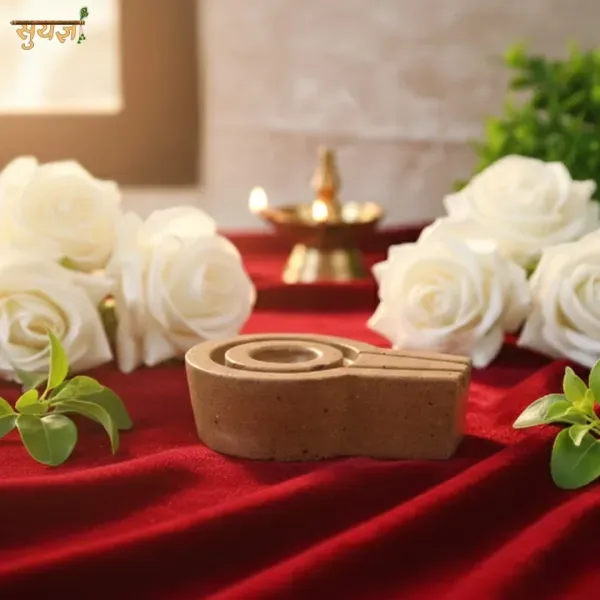






Most people who bring a Shivling home set it up carefully — clean cloth, good direction, fresh flowers. But one thing is frequently missing from the setup. And without it, the daily puja cannot be done properly.
The Jalhari.
Not because of ritual formality. Because practically — where does the jal go when you pour it over the Shivling during abhishek? Without a Jalhari, the sacred water has no place to flow. The puja becomes incomplete, not by intention, but by missing one essential element.
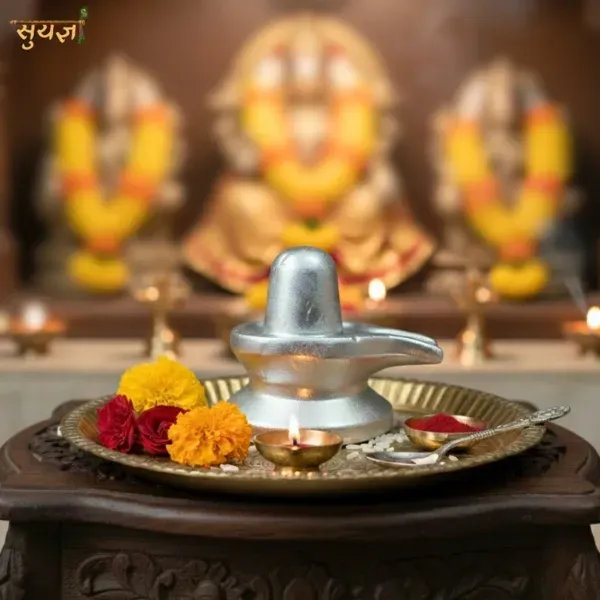
This is what the Jalhari does. It catches what you offer. It gives the puja a complete form.
What Is a Jalhari — The Sacred Meaning Behind the Base
"Jal" means water. "Hari" in this context means the one who takes or receives. Jalhari — the one that receives the sacred water.
In Shiva puja, abhishek — the ritual bathing of the Shivling — is the central act. Water, milk, honey, curd, ghee, gangajal — each has its purpose, each has its specific blessing it invokes. The Shiv Purana describes abhishek as the most powerful form of Shiva worship — more than flower offerings, more than incense, more than any other ritual.
And all of that sacred liquid — once it has touched the Shivling, once it has received Shiva's energy — needs a sacred vessel to rest in.
That vessel is the Jalhari.
In temples, the water that flows from the Jalhari is considered prasad — it has touched the Shivling and carries Shiva's energy. Devotees receive it on their head and hands. In your home mandir, the same principle applies. The water that collects in your Jalhari after abhishek is not wastewater — it is blessed water.
The Jalhari is also called "Yoni" in traditional texts — representing Goddess Parvati. The Shivling represents Lord Shiva. Shivling in the Jalhari — Shiva resting in Shakti — is the complete symbol of the divine union of masculine and feminine energy, consciousness and creation. This is why together they are considered more powerful than either alone. A Shivling without a Jalhari is symbolically incomplete — like Shiva without Parvati.
The Nag on This Jalhari — Vasuki, Not Decoration
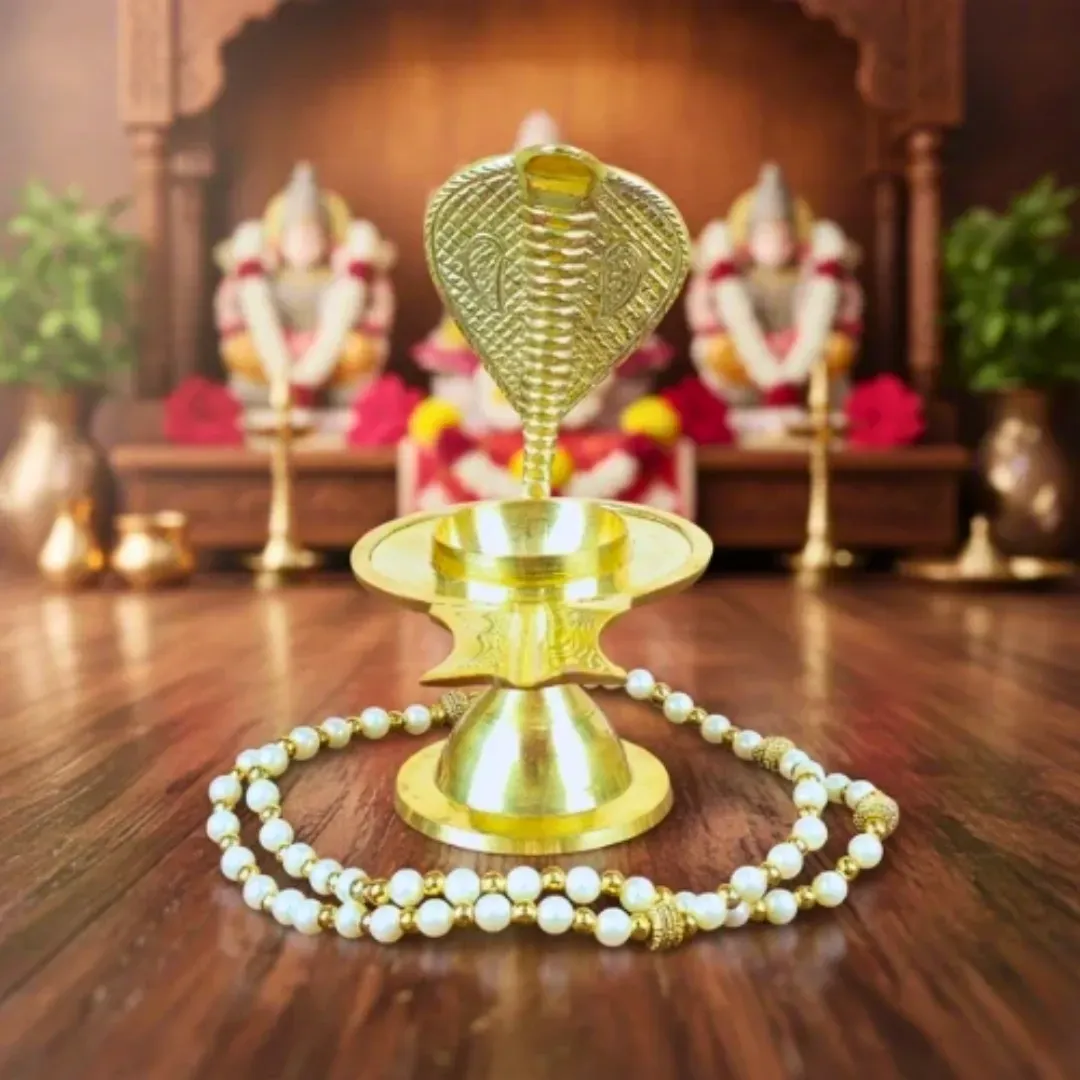
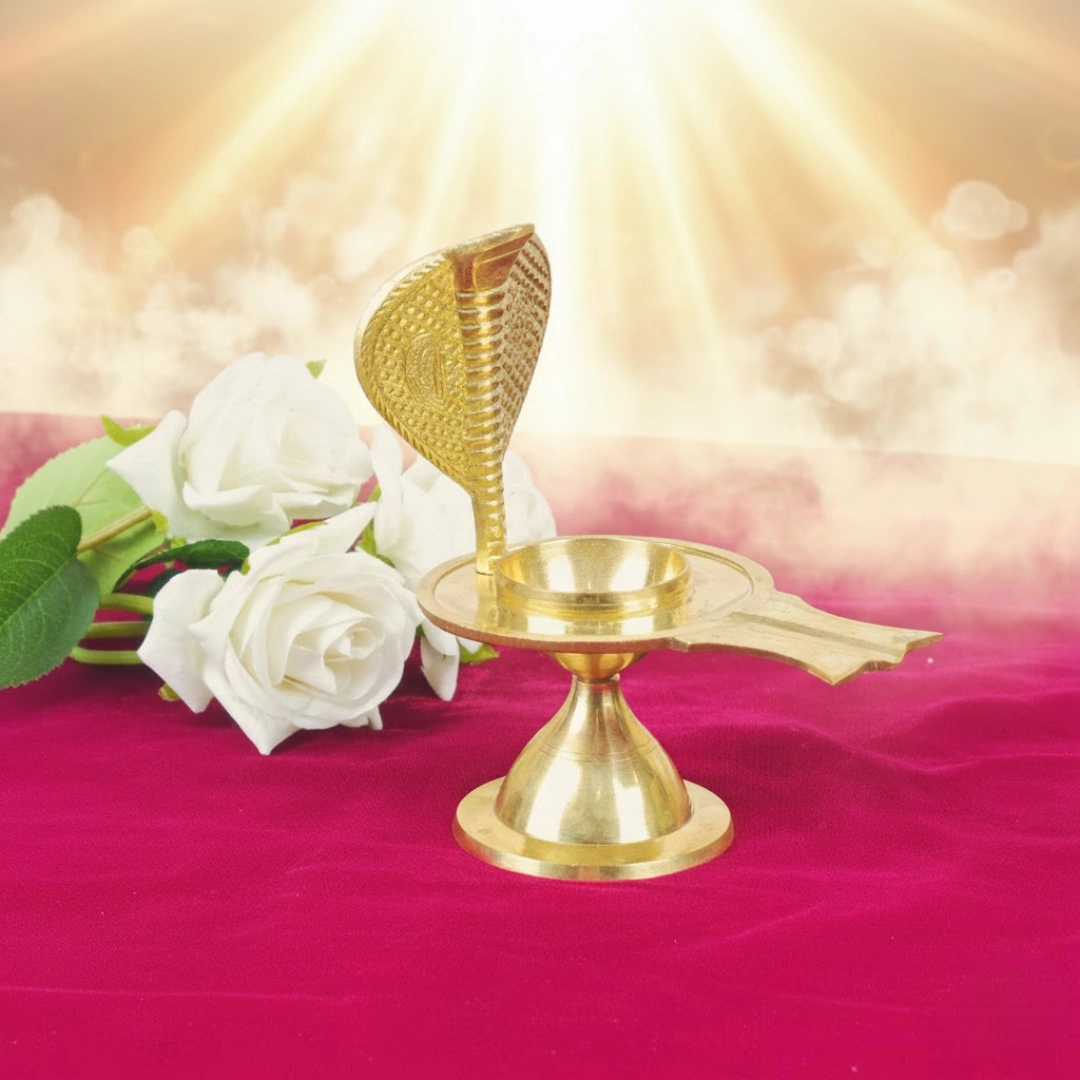
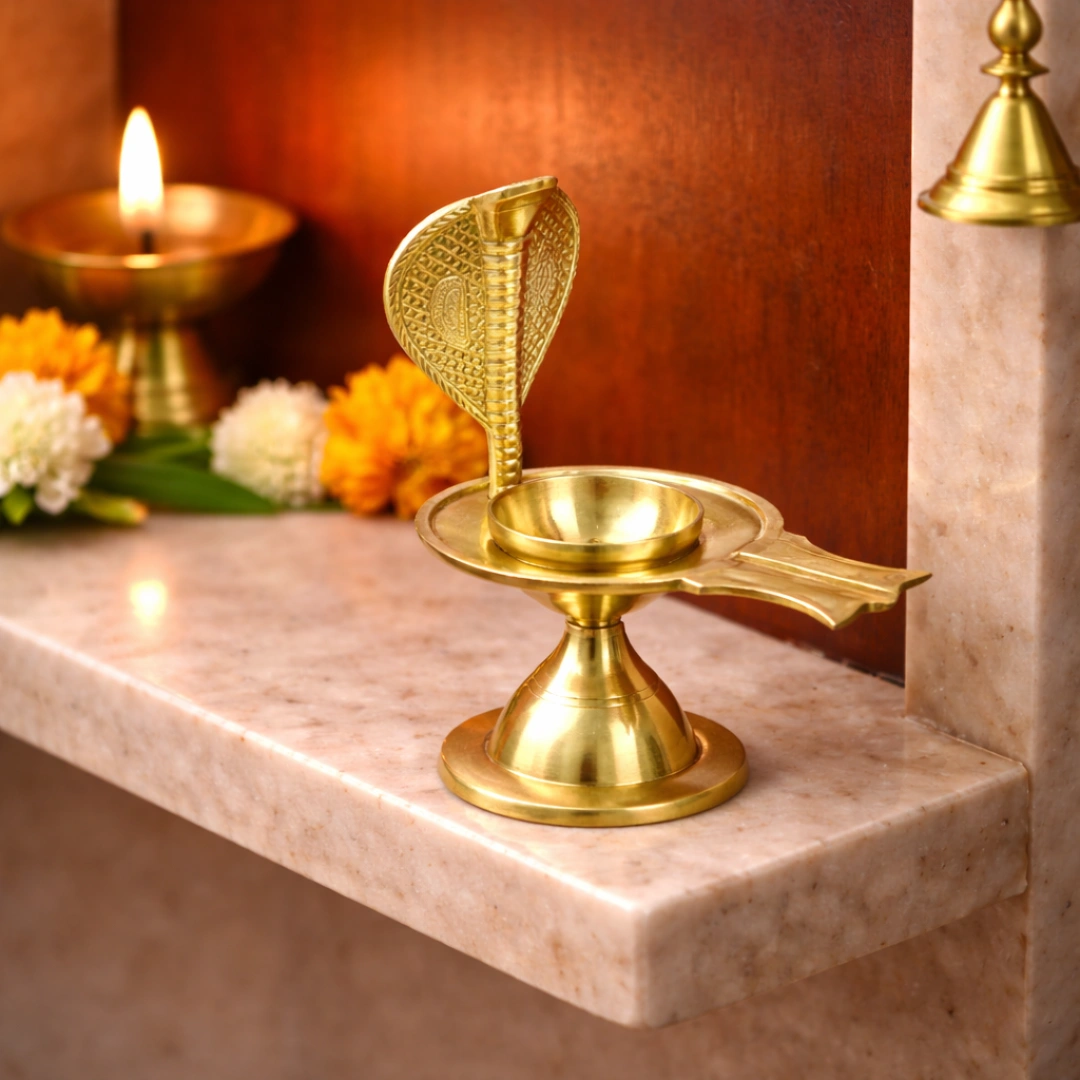
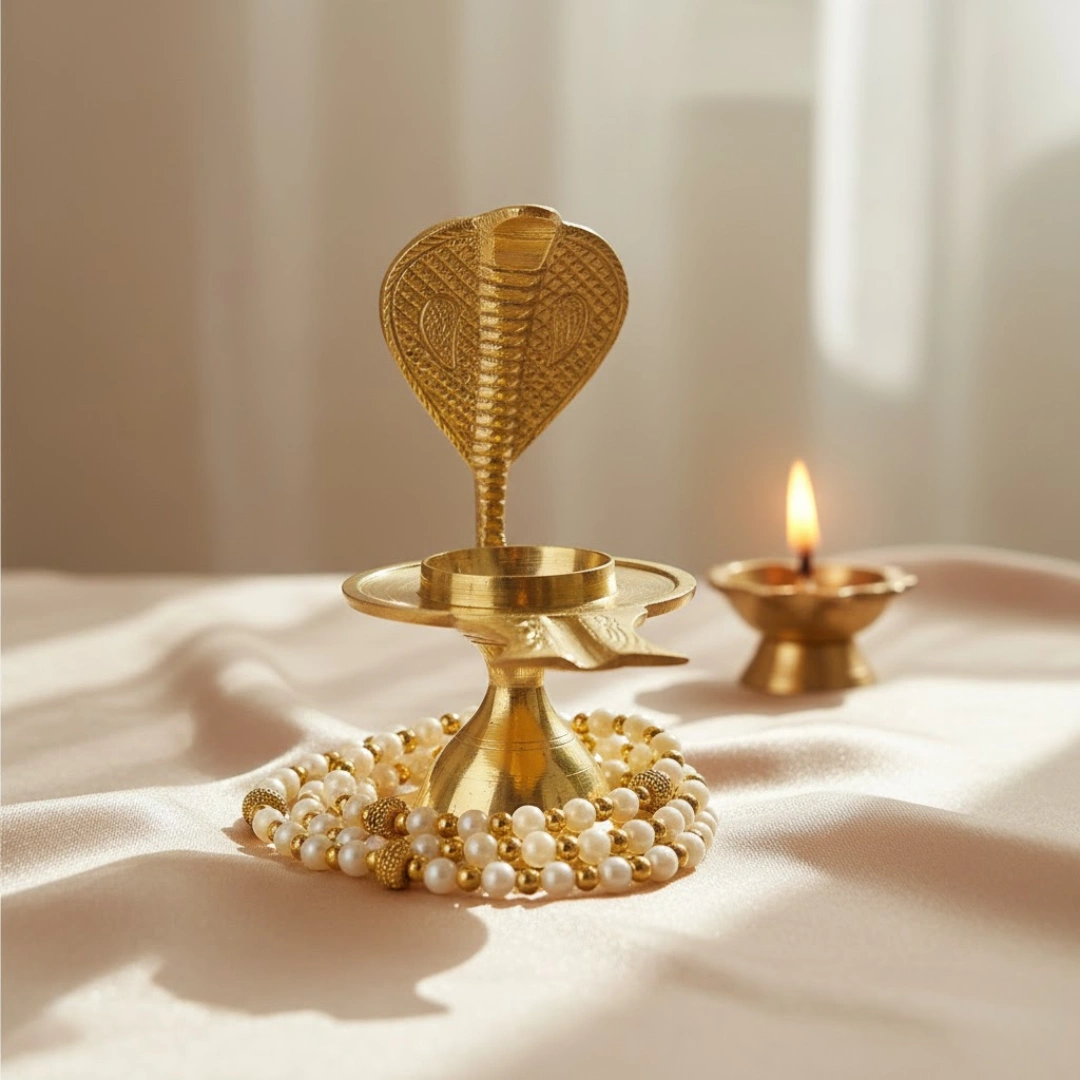
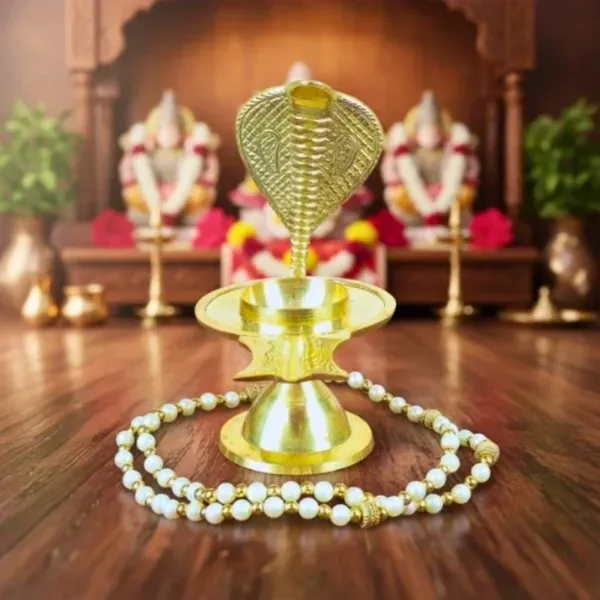
The cobra on this Jalhari is Vasuki — the king of serpents who lives around Shiva's neck.
In Hindu tradition, the Nag represents several things simultaneously:
Time: Snakes shed their skin — they are symbols of transformation, of the old giving way to the new. Shiva, as Mahakaal, is the lord of time. The Nag around him represents his mastery over time itself.
Kundalini energy: In yoga, the dormant spiritual energy in the human body is represented as a coiled serpent at the base of the spine. Shiva's Nag represents this awakened kundalini — fully risen, fully conscious.
Protection: The Nag guards the Shivling. In temple design, you will always find Sheshnag or Vasuki arching over the Shivling. The cobra's raised hood is a protective canopy — a sacred shield.
Kaal Sarp Dosh: Many people who have Kaal Sarp Dosh in their kundali are advised to worship Shiva with a Nag present. Having a Jalhari with a Nag design is considered auspicious for those seeking relief from this dosha.
When you pour jal over your Shivling and it flows into this Jalhari — Vasuki receives it first, guards it, and it rests in the sacred vessel.
Why Brass — Not Marble, Not Steel, Not Plastic
Traditional Shiva puja items are made in specific materials for specific reasons. Brass — an alloy of copper and zinc — has been used in temple puja items for thousands of years.
Shiv Purana and Agama Shastra both mention that copper-based metals are especially suited for Shiva puja — they are considered conductors of divine energy, they do not corrode easily, and they carry the warmth that is associated with sacred ritual.
Brass also has natural antimicrobial properties — in the context of water vessels used for daily puja, this is practically significant. The jal poured over the Shivling and collected in a brass Jalhari remains pure longer than in any synthetic material.
Over time, brass develops a natural patina — a slightly darker, warmer tone. This is not deterioration. In temple tradition, this aged look is considered auspicious — it means the object has been used, has been present in puja, has accumulated blessings over time.
Do not aggressively clean brass to restore shine. A gentle wipe with a soft cloth is enough. The patina is part of its sacred history.
Jal Abhishek — Step by Step
For those new to daily Shivling puja — this is the simple form:
What you need: Fresh water or gangajal, the Jalhari in place under the Shivling, a small kalash or lota to pour from.
Step 1: Place the Shivling securely in the Jalhari. The Shivling should sit stable — not wobbling.
Step 2: Light a diya. Offer a bilwa patra — three-leafed — on the Shivling.
Step 3: Begin pouring water slowly and continuously from the lota over the top of the Shivling while chanting: "Om Namah Shivaya" — or the Mahamrityunjay Mantra for deeper practice.
Step 4: As the water flows down the Shivling and into the Jalhari — watch the spout. The flow of water out of the Jalhari's spout is called "nirmalya" — it has been blessed.
Step 5: Offer vibhuti, a red or white flower. Complete with aarti.
That is a complete abhishek. It takes 10 minutes. Done daily — it changes the energy of the home.
On special days: Shravan Maas Mondays and Mahashivratri — do a full panchamrit abhishek. Pour milk, curd, honey, ghee and gangajal in sequence, each with its mantra. The Jalhari collects all of it.
Pairing This Jalhari With Your Shivling
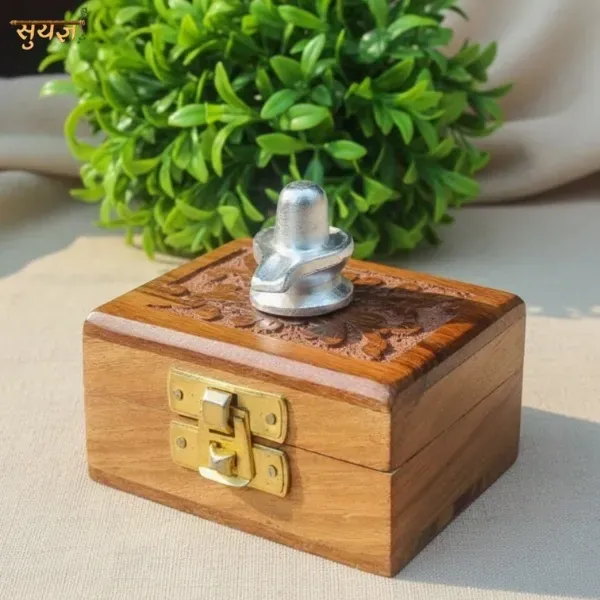
This Jalhari is designed to work with all standard Shivlings — Narmadeshwar river stone, black stone, marble, sphatik (clear quartz). It is not tied to one specific Shivling.
If you already have a Narmadeshwar Shivling at home — this Jalhari completes your setup. If you are building your home mandir from the beginning — Shivling and Jalhari together is the starting point for a complete Shiva corner.
Explore the Narmadeshwar Shivling at Suyagya — natural river stone, with natural tilak, Swayambhu. Pair it with this Jalhari for a complete, meaningful Shiva puja setup.
Also available at Suyagya — 5 Mukhi Rudraksha Jaap Mala for daily mantra practice alongside your Shivling puja.