 Best Offers for You




Walk into any crystal shop in India, Japan, Brazil or Egypt — and you will find Green Aventurine. Every single one. That kind of consistency across 4,000 years and every continent does not happen by accident.
The ancient Tibetans embedded Aventurine into their statues, specifically in the eyes — believing it could improve vision and sharpen perception. The Chinese associated it with Imperial Jade, the most coveted stone in their culture, and used it in ceremonial objects for rulers and healers. In 18th century Italy, glassmakers accidentally discovered that when copper filings fell into molten glass, they created a shimmering golden material that reminded them of a green stone they already knew. They called it a ventura — "by chance." The stone got its name from the glass, not the other way around.
That name stuck. And the reputation stuck too.
So why do people actually call it the Stone of Opportunity?
Not because it magically creates luck. That's not how it works, and anyone who tells you otherwise is selling you something.
Green Aventurine works on something more specific — your relationship with possibility. Most of us walk around with a low-level anxiety about the future. A quiet sense that things probably won't work out, that the good opportunity will go to someone else, that we should be careful rather than bold. This is the Heart Chakra in a defensive state.
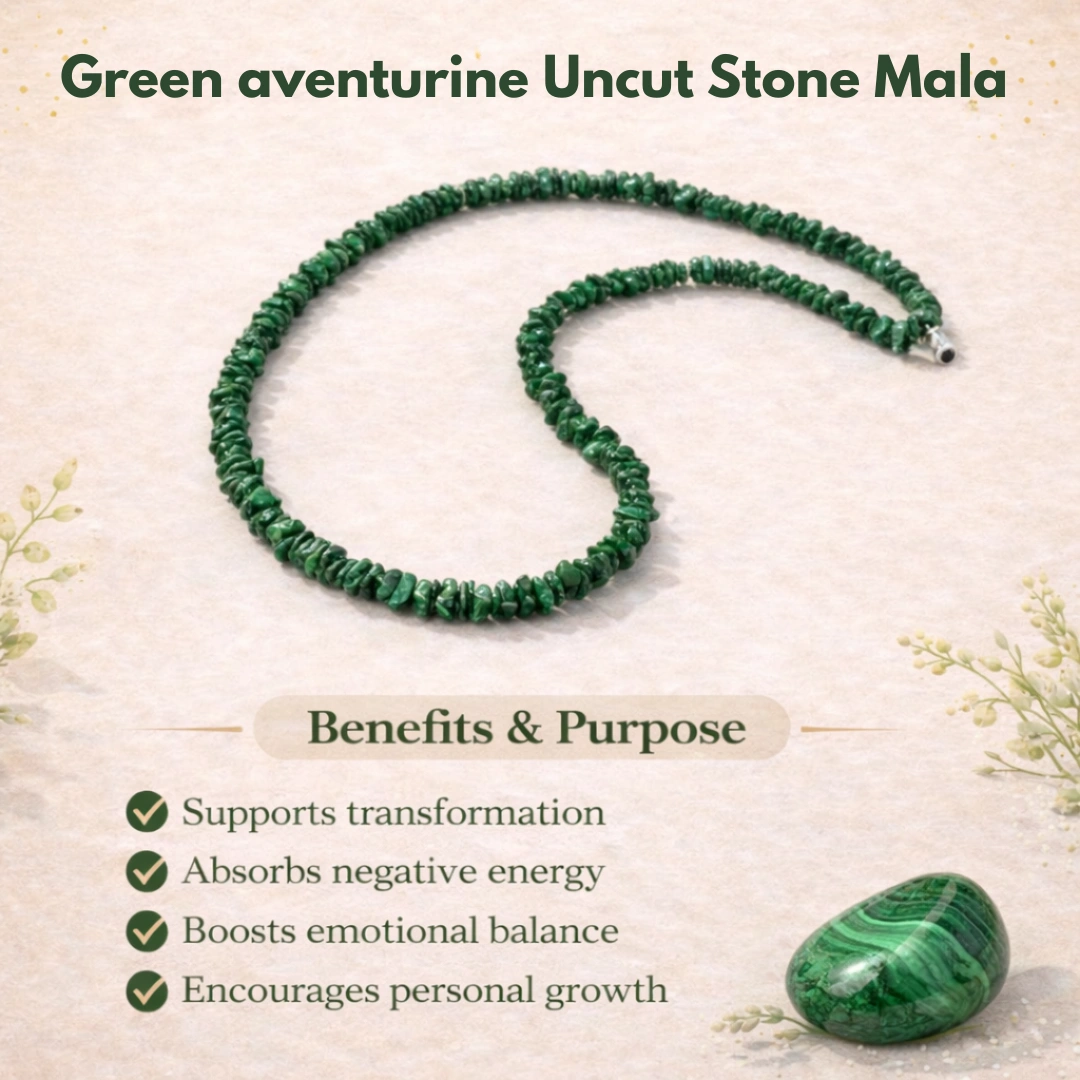
Green Aventurine gently works against that. It is associated with the Anahata — the Heart Chakra — not just for love and relationships, but for openness. The willingness to try, to see options where you previously saw obstacles, to feel optimistic without forcing it. People who wear this stone consistently report:
- A quieter, less reactive mind in stressful situations
- More willingness to act on opportunities rather than wait
- Feeling lighter — like something heavy lifted without a specific reason
- Better emotional recovery time after setbacks
None of that is luck. That is a shift in how you engage with the world.
Why chip beads — and why this mala is different
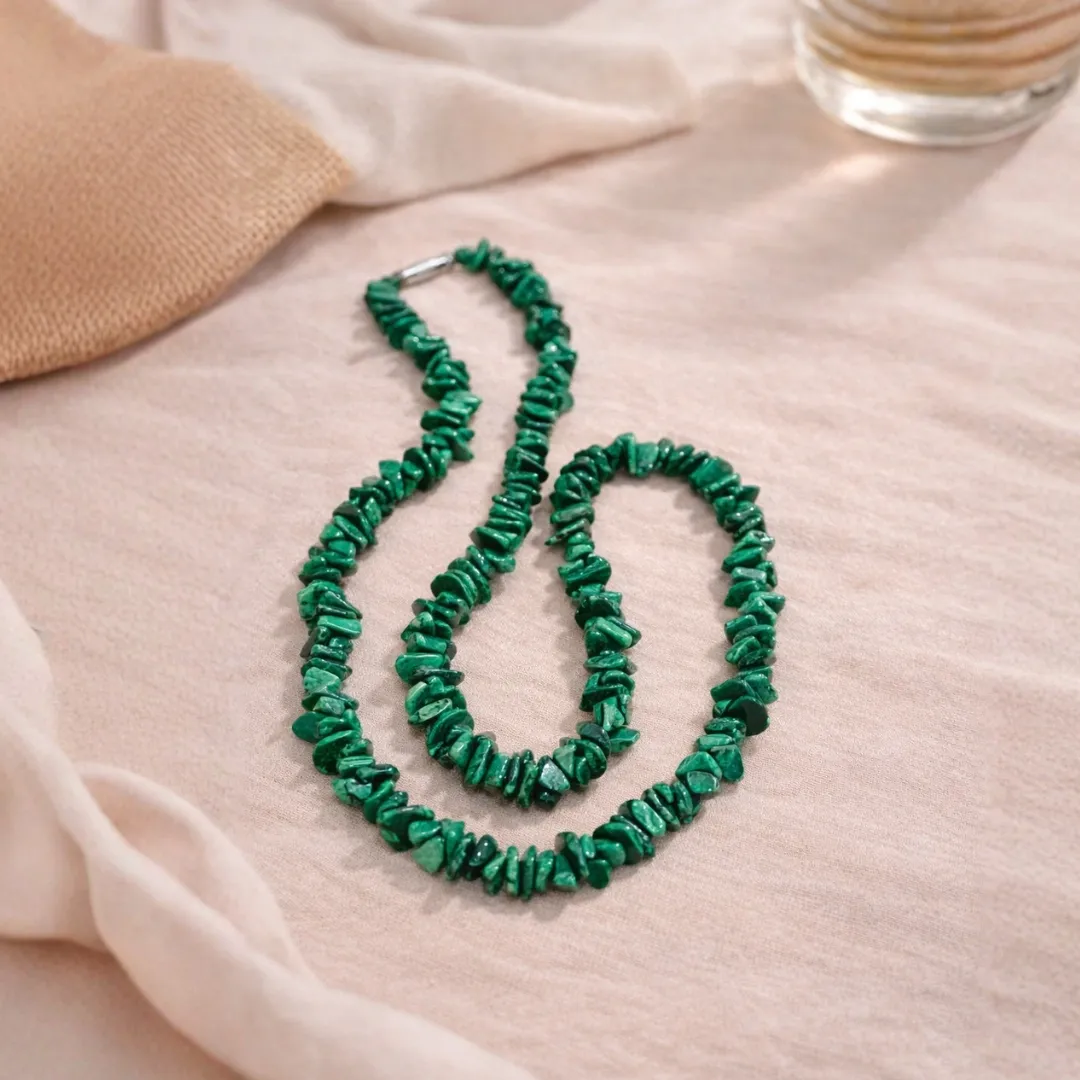
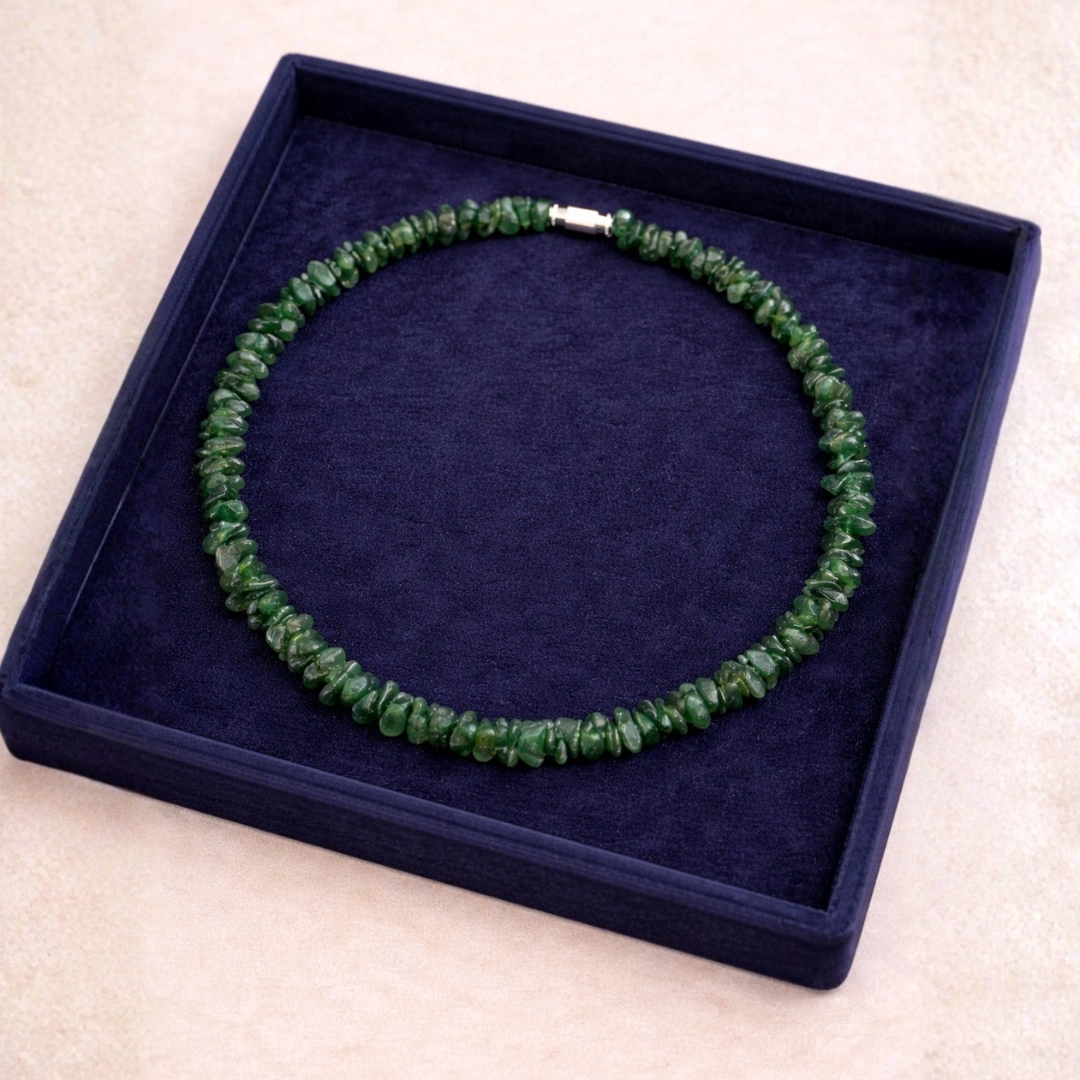
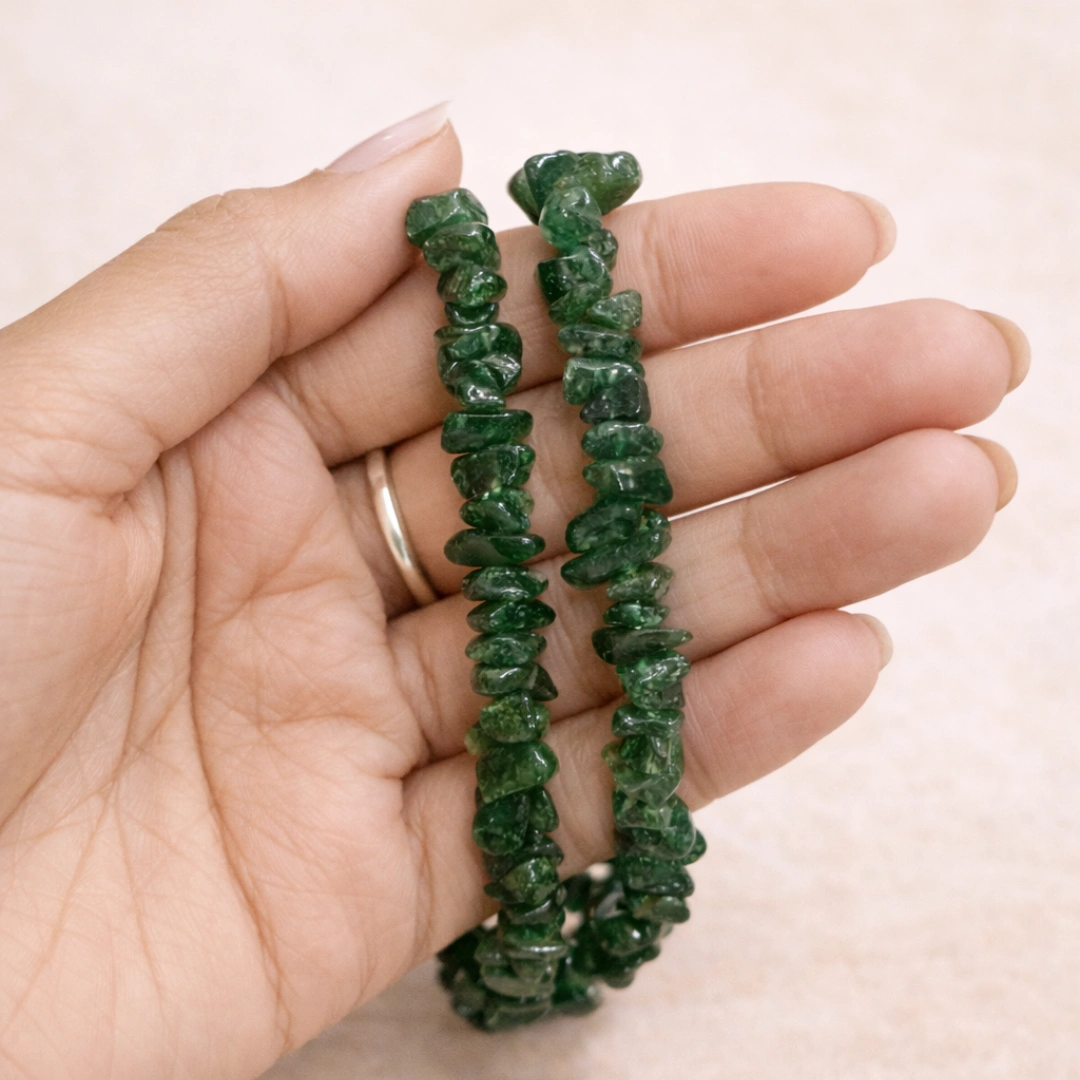
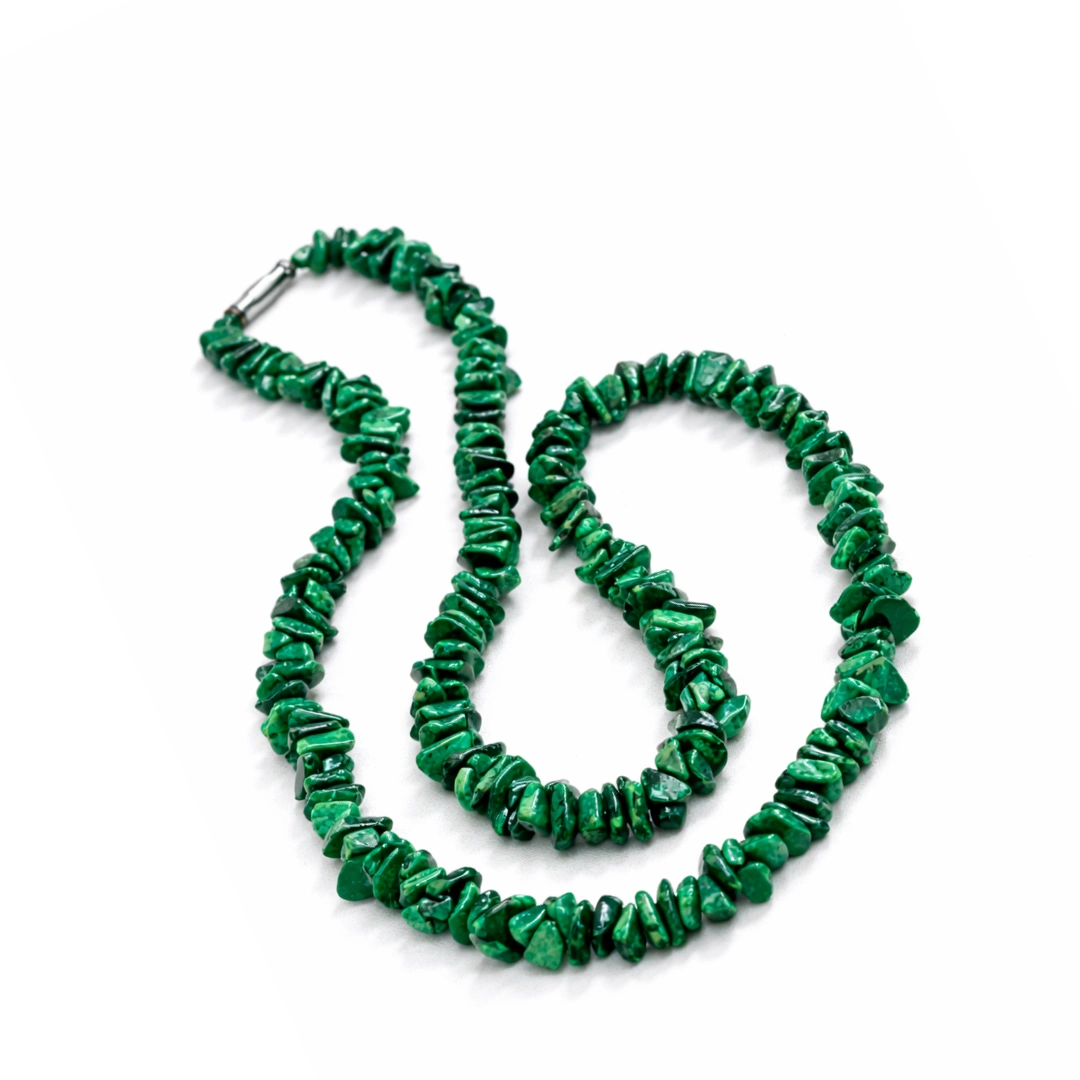
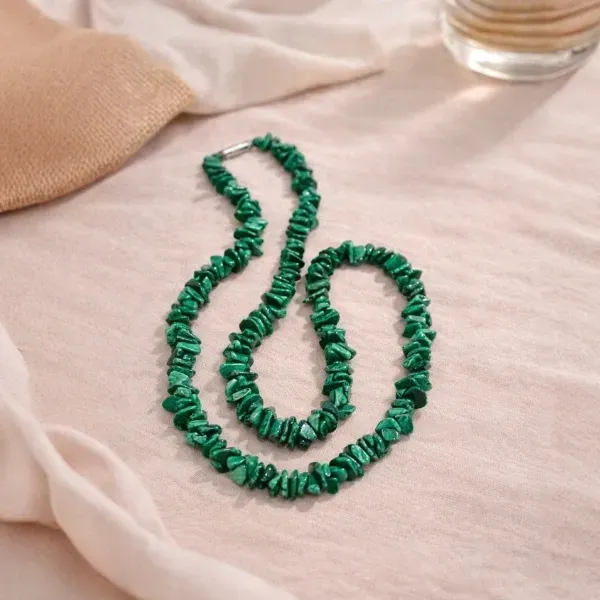
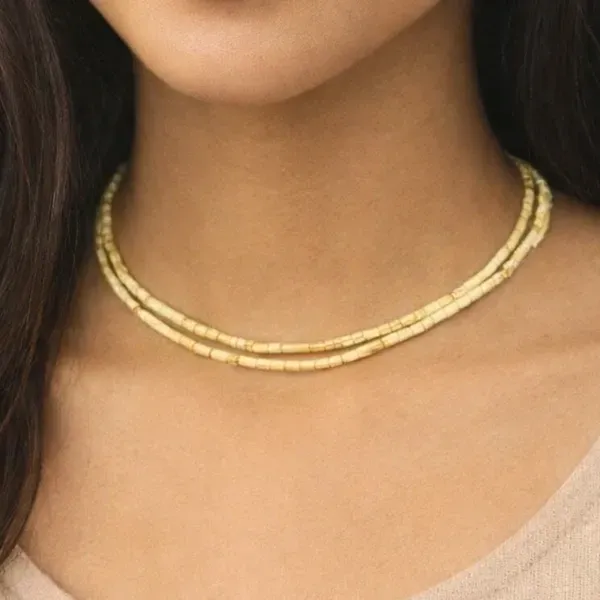
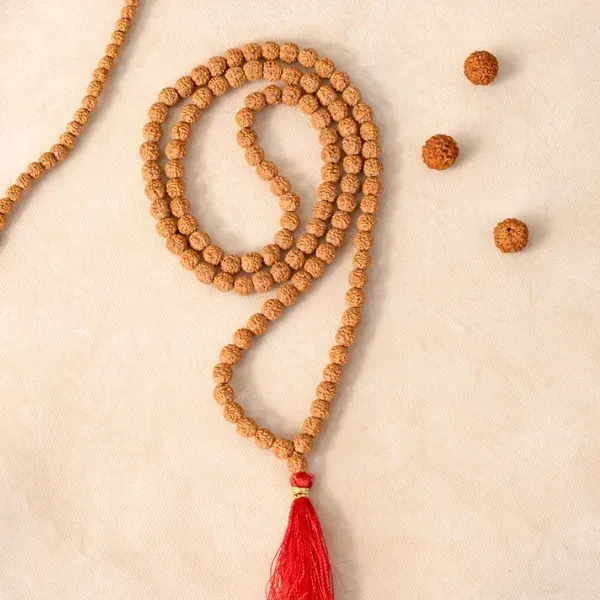
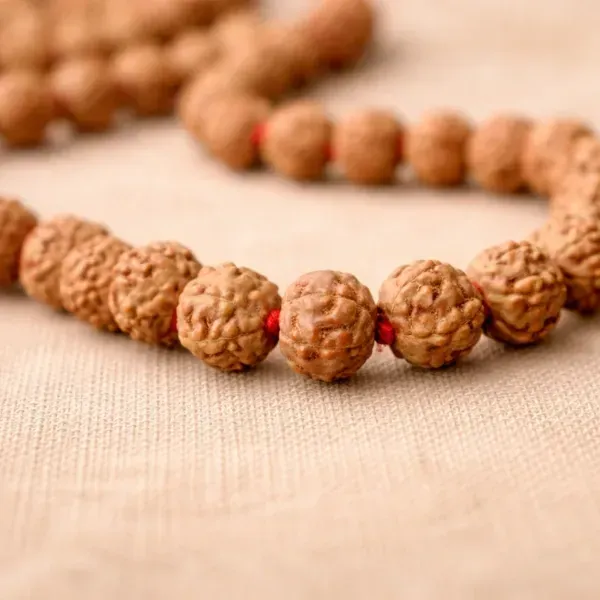
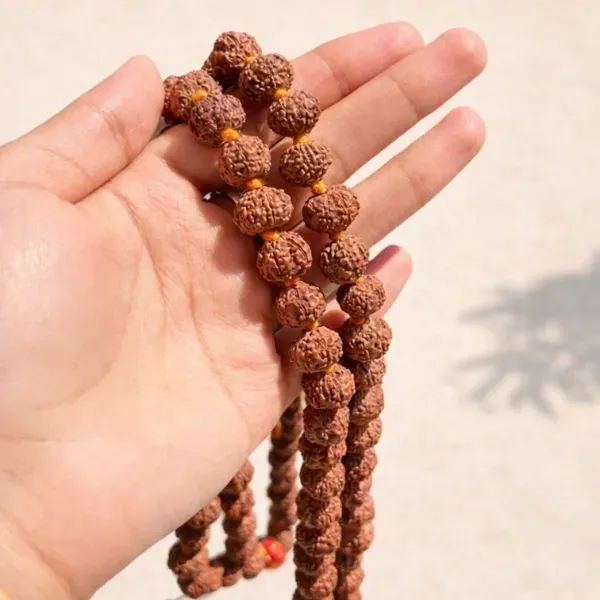
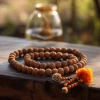
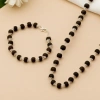
Most Green Aventurine malas in the market use 8mm round polished beads — uniform, perfect, identical. Those are beautiful. But this mala uses chip beads — natural, irregular, raw-edged pieces of the stone strung together in a single line.
Here is why that matters:
- More surface area — chip beads have more of the stone's natural surface in contact with your skin compared to round beads
- Natural texture — each chip carries the original mineral texture of the stone, unpolished and real
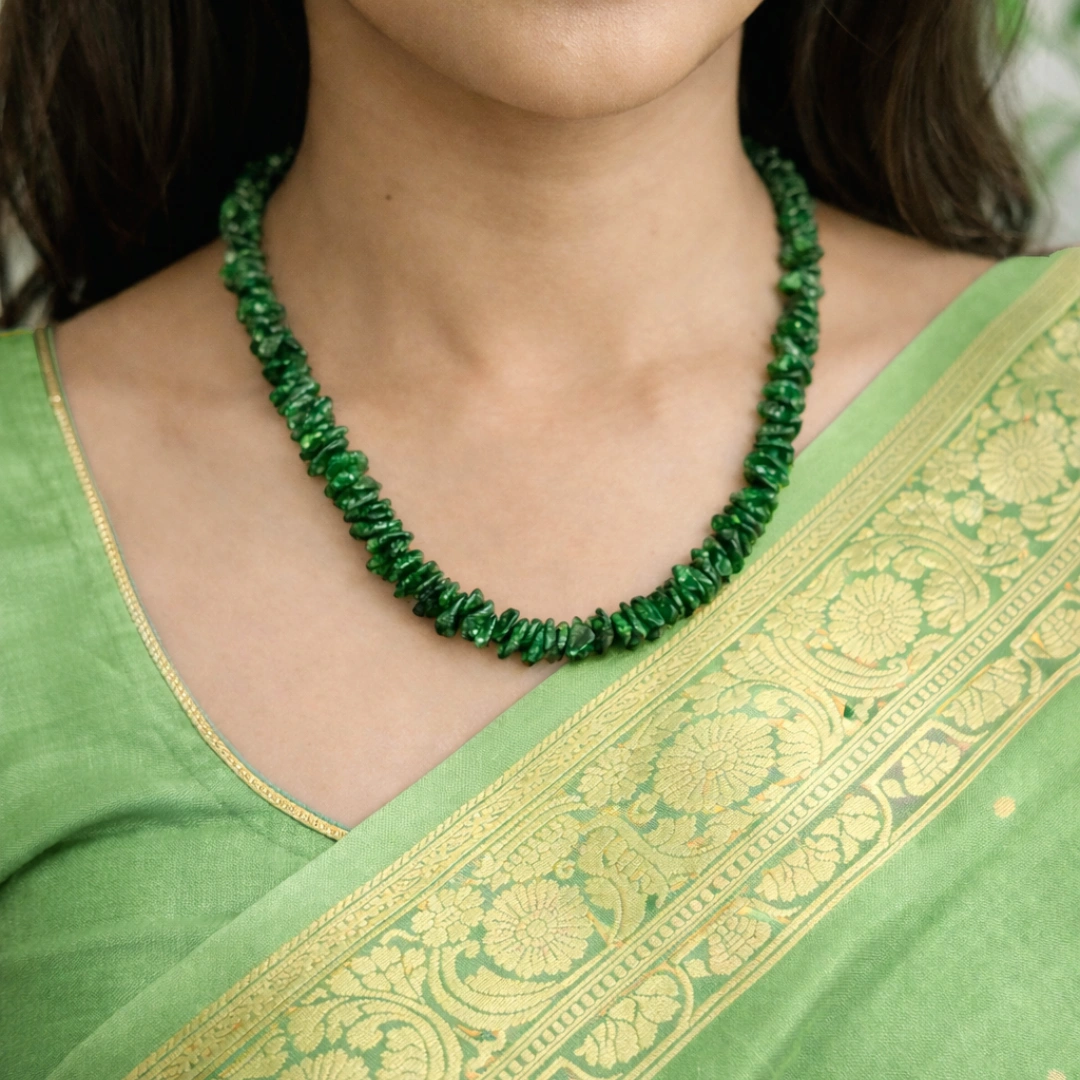
- Wears like a necklace — the chip style drapes softly and looks like a regular stone necklace, not a "spiritual item." You can wear it to the office, to dinner, anywhere
- Versatile — works for japa meditation by moving bead to bead, or simply worn all day for continuous energy
This is the mala you forget you're wearing — until you take it off and notice the difference.
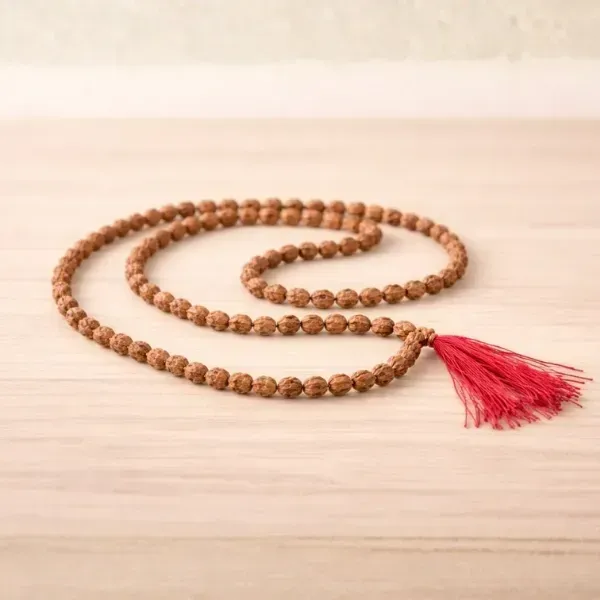
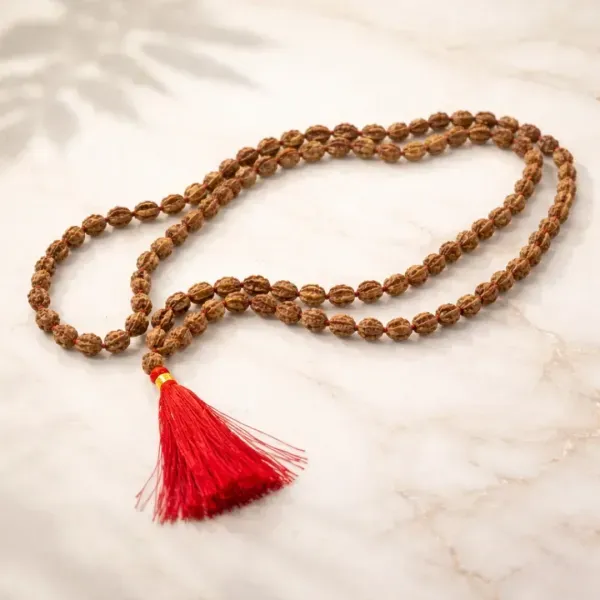
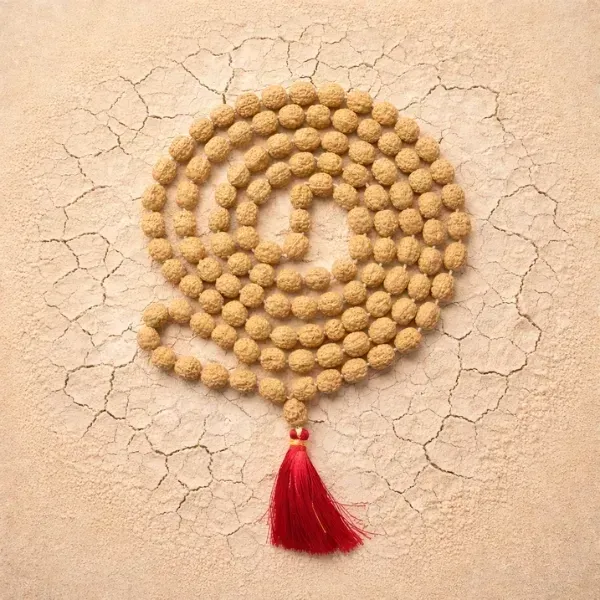
Pair it with the Rose Quartz Chip Mala for Heart Chakra work on both emotional healing and self-love together. Or explore the full Stone Mala Collection for more options.
One thing about Green Aventurine that surprises most people
This stone is not just for spiritual use. It has a long history in wellness practices for physical health too — traditionally associated with the heart, lungs and circulatory system. It was used in old Ayurvedic and Chinese medicine contexts as a companion stone during recovery from illness, not because it cures anything, but because its calming frequency helps the nervous system stay out of fight-or-flight mode while the body heals.
Today, that translates to something most of us need: a stone that helps you stay calm under pressure. Not just during meditation. During your day.
That is ultimately what makes this mala worth wearing. Not the luck. Not the mystique. The quiet, consistent support it offers for staying open, staying calm, and staying ready for whatever comes next.