Science vs Spirituality: Which One Actually Calms the Mind Better?
It's a question that comes up more than you'd think. On one side: breathing exercises, therapy, cold water, exercise — tools with clinical research behind them. On the other: meditation, mantra, prayer, ritual — tools with thousands of years of human experience behind them. Which one actually works? Which one should you trust?
The honest answer might surprise you. Not because one wins — but because the question itself is built on a false premise. Science and spirituality are not two opposing systems for calming the mind. They are two different languages describing the same experience, often arriving at the exact same conclusion through completely different routes.
Here's what both sides actually say — and where they meet.
What Science Says About Calming the Mind
Modern neuroscience and psychology have given us a detailed map of what happens in the brain and body when we're stressed — and what actually reverses it. The findings are consistent, well-replicated, and practical.
_1780045164.webp)
1. Controlled breathing
When you slow your breathing — especially lengthening the exhale — you directly activate the parasympathetic nervous system. This is your body's built-in calm response, and it counteracts the cortisol and adrenaline that stress releases. The effect is measurable within minutes and works the same way in every human body, every single time.
2. Mindfulness meditation
Eight weeks of consistent mindfulness meditation produces measurable changes in brain structure — increased grey matter in the prefrontal cortex and reduced reactivity in the amygdala. Harvard neuroscientist Sara Lazar documented this clearly — the meditating brain literally looks different from the non-meditating brain on an MRI scan.
3. Exercise
Physical movement releases endorphins, lowers cortisol, and increases BDNF — a protein that supports brain cell growth. Even five minutes of moderate exercise produces measurable mood improvement within the same session. The American Psychological Association consistently identifies exercise as one of the most effective tools for anxiety and stress.
4. Cognitive reframing
Cognitive Behavioural Therapy — the most extensively researched psychological treatment for anxiety — works by changing how you interpret situations, not the situations themselves. The core insight is that thoughts are not facts. Research shows CBT produces lasting changes in how the brain processes stress — changes that persist long after the therapy ends.
5. Sleep
Sleep deprivation is one of the most reliable ways to make the mind less calm — and getting enough of it is one of the most reliable ways to restore it. During sleep, the brain clears metabolic waste, consolidates learning, and resets emotional regulation. Seven to nine hours is not a lifestyle preference. It is what the brain physically requires.
What Spirituality Says About Calming the Mind
Spiritual traditions have been working on this problem for a great deal longer than modern psychology. And what's remarkable is how consistent the conclusions are — across traditions that developed independently, in different parts of the world, with no communication between them.
_1777357854.webp)
1. Mantra meditation
Virtually every major spiritual tradition has some form of mantra or sacred sound practice — Hindu Japa, Buddhist chanting, Christian contemplative prayer, Sufi dhikr. The mechanism across all of them is the same: give the restless mind a single point of focus and train it to return to that point whenever it wanders. Thousands of years of practitioners describe the same result: a gradual quieting of mental noise and access to a deeper stillness.
2. Ritual and routine
Every major spiritual tradition builds daily ritual around the idea that consistency creates calm. Morning prayers, evening offerings, weekly observance — these create predictable moments of pause, give the nervous system regular anchors, and build deliberate structure into the day. Ancient wisdom that modern behavioural psychology has since confirmed and named.
3. Acceptance and surrender
From the Bhagavad Gita's nishkama karma to Buddhist non-attachment to Stoic philosophy — traditions universally identify the same source of mental suffering: the desperate attempt to control what cannot be controlled. And they all prescribe the same antidote: genuine acceptance of what is, combined with clear action on what actually is within your reach. This is not resignation. It is one of the most practically powerful mental frameworks ever developed.
4. Connection to something larger
Prayer, devotion, service, community — spiritual traditions recognise that the mind calms when it stops being entirely focused on its own concerns. A 2025 review of research covering studies from 2005 to 2025 found that high levels of spirituality are consistently associated with lower anxiety symptoms. The sense of meaning and connection that spiritual practice provides is a measurable mental health protective factor.
5. Working with energy
Vedic and yogic traditions recognise that the human being has an energetic dimension that also requires care. Pranayama, specific stones or malas, protective tools, cleansing rituals — all understood as working at a subtler level that the purely psychological approach doesn't address. This is the area where science hasn't fully caught up yet — but absence of a scientific explanation is not the same as evidence of absence.
Science vs Spirituality — Side by Side
Here's the same goal — a calm, clear mind — viewed through both lenses at once. What's striking is how often they're pointing at the exact same thing.
| What You Want | Science Says | Spirituality Says |
|---|---|---|
| Calm the nervous system fast | Slow your exhale — activates the parasympathetic response within minutes | Pranayama and breathwork — Nadi Shodhana, alternate nostril breathing |
| Quiet mental chatter | Single-point focus meditation — reduces default mode network activity | Mantra Japa — give the mind one word or sound and return to it |
| Change negative thought patterns | CBT — thoughts are not facts, observe and redirect them | Viveka (discernment) — separate yourself from the thought, don't become it |
| Build long-term calm | Daily consistent habits — small actions compounded over weeks | Dinacharya (daily routine) — structured daily spiritual practice |
| Reduce anxiety | Exercise, sleep, social connection — all measurably reduce cortisol | Prayer, community, surrender — documented reduction in anxiety markers |
| Find meaning in difficulty | Post-traumatic growth research — meaning-making reduces psychological suffering | Karma, dharma, divine will — frameworks for finding purpose in hardship |
| Ground yourself in the present | 5-4-3-2-1 grounding, somatic awareness — engage the five senses now | Mala practice — tactile bead-by-bead focus brings the mind to this moment |
The Honest VerdictDifferent words. Same destination. The nervous system doesn't distinguish between a "scientific" calming technique and a "spiritual" one. It just responds to what actually works — and both sides have tools that do.
_1780045205.webp)
Where They Actually Meet
When you look at what science has discovered about the meditating, praying, ritually active brain — the overlap with what spiritual traditions have always said is striking.
- fMRI studies show that mantra meditation and mindfulness meditation activate the same brain regions. They are neurologically indistinguishable.
- Prayer produces the same physiological calm as meditation — lower heart rate, reduced cortisol, parasympathetic activation. The name you give the practice doesn't change what happens in the body.
- Ritual reduces anxiety. Repeated, structured action creates predictability — and predictability calms the brain's threat-detection system. Every culture's religious ritual is doing this, whether it knows it or not.
- The feeling of connection — to God, to the universe, to a community — activates the same neural reward pathways as human social connection, one of the most powerful stress buffers known to science.
- Acceptance practices reduce suffering. CBT rediscovered what Buddhism and Stoicism knew: that fighting reality causes more pain than accepting it while still acting clearly. Different frameworks. Identical conclusion.
So Which One Should You Use?
_1777357926.webp)
Both. But more specifically — whichever one you will actually do, consistently.
The most effective stress management tool is not the most clinically sophisticated or the most spiritually ancient. It's the one that fits your life, resonates with something real in you, and that you will return to when things get hard. A breathing technique done daily beats a ten-day retreat done once. A five-minute mantra practice done with genuine intention beats a gym session you dread and avoid.
The most effective approach borrows freely from both — breathing exercises and a mala, sleep hygiene and mantra, cognitive awareness and acceptance practice — addressing the mind from every direction simultaneously.
The Bridge Between Both — 5 Mukhi Rudraksha Mala
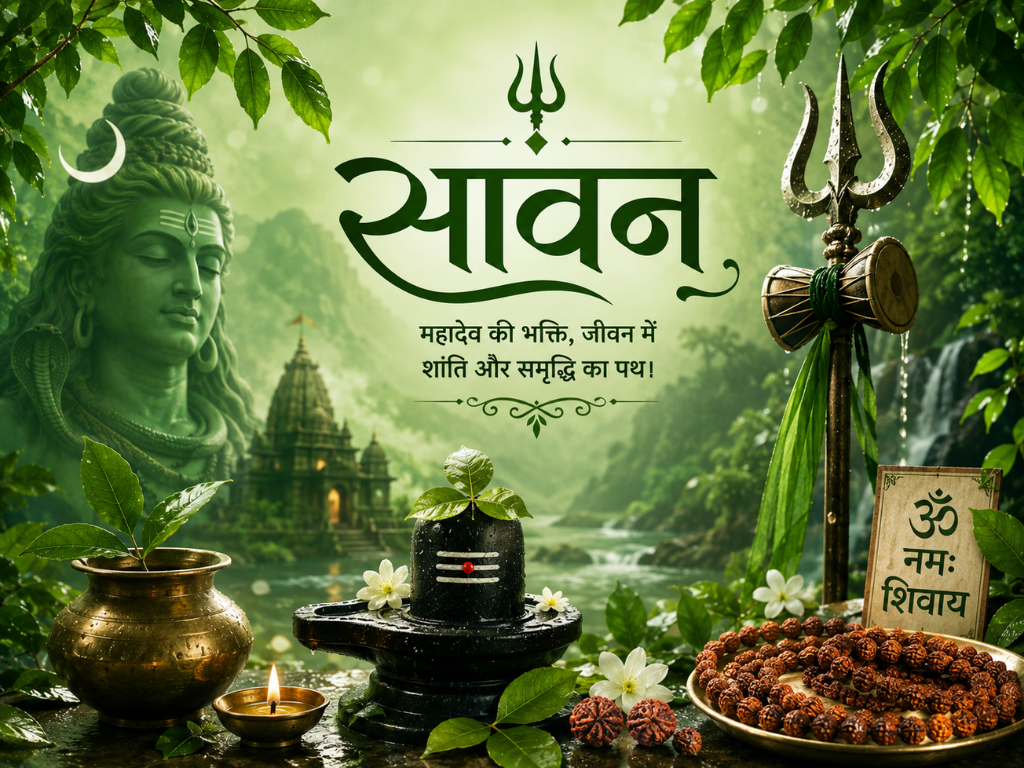
If there is one object that literally sits at the intersection of science and spirituality, it might be the Rudraksha bead — and specifically the 5 Mukhi Rudraksha Mala.
Rudraksha beads — seeds of the Elaeocarpus ganitrus tree found primarily in Nepal — have been used in Indian spiritual practice for thousands of years. The 5 Mukhi bead is the most universally accessible — associated with Lord Shiva and the five elements, it carries no restrictions and is considered suitable for anyone.
What makes it particularly interesting from a "science meets spirituality" angle is that Rudraksha beads have been the subject of bioelectrical research. Studies have measured their electromagnetic properties and documented effects on heart rate variability consistent with a calming influence on the autonomic nervous system. This doesn't prove everything tradition claims — but it does mean dismissing it as purely symbolic isn't accurate either.
From the spiritual side, using a 5 Mukhi Rudraksha Mala for Japa meditation — moving bead by bead through 108 repetitions of a mantra — combines the psychological benefits of focused repetition, the tactile grounding of the beads, and the energetic quality that Rudraksha carries in Vedic tradition. Five to ten minutes each morning, mala in hand, "Om Namah Shivaya" repeated quietly — it is one of the most complete mind-calming practices available, working through both science and spirituality simultaneously.
_1780045220.webp)
The Answer Was Never One or the Other
The debate between science and spirituality on this question has always been a false one. Both are trying to solve the same problem — a human mind that suffers unnecessarily, that loops in anxiety and stress, that struggles to find the stillness it needs to function and live fully.
They developed independently, in different centuries, in different languages — and arrived at the same place. The nervous system calming down. The mind finding focus. The person connecting to something beyond their own immediate worry. Start with what resonates. Add what works. Keep what you'll actually maintain. That's the whole answer — and it has been, from both directions, all along.