 Best Offers for You



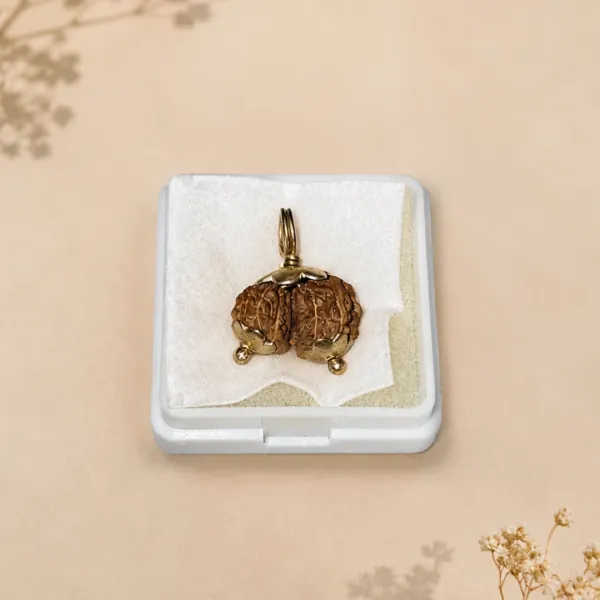
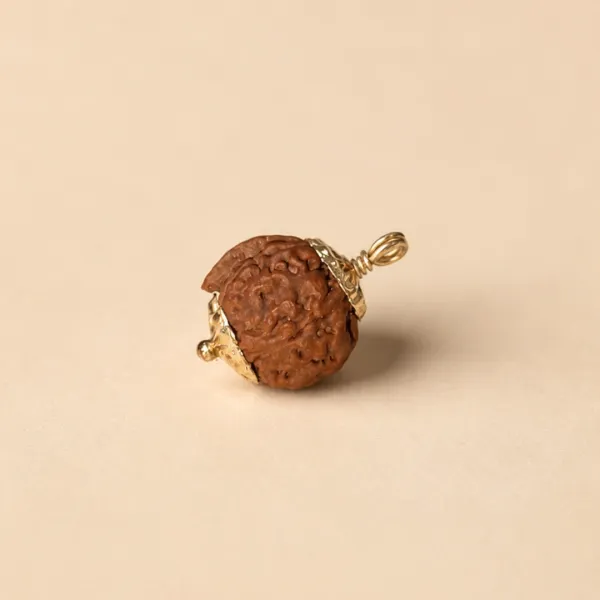
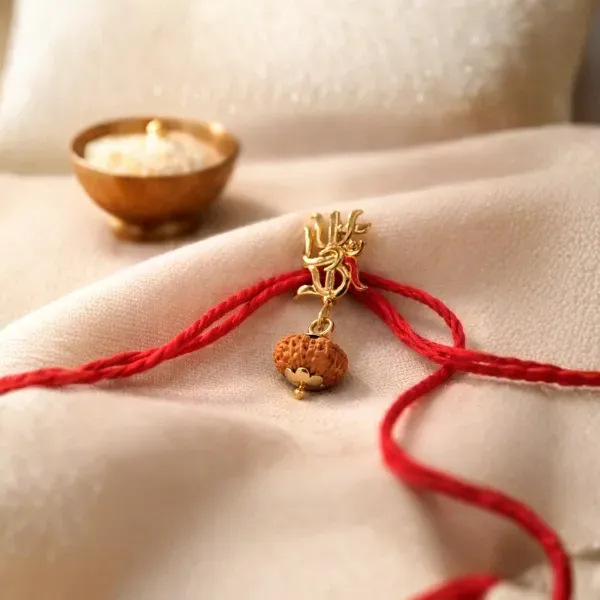
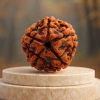
।। पंचवक्त्रः स्वयं रुद्र: कालाग्निनार्मतः प्रभुः सर्वमुक्ति प्रदश्चैव सर्व काम फल प्रदः ।। — Shiv Purana, Chapter 25, Shloka 69
"The five-faced Rudraksha is Rudra himself. It is Kalagni. It bestows all kinds of salvation and fulfills all desires."
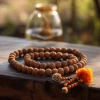
Walk into any ashram in Rishikesh, Haridwar or Varanasi. Sit near any Shiva temple during the early morning hours. Watch the old sadhus, the young monks, the quiet devotees sitting with their eyes half closed. Almost every single one of them has the same thing in their hands.
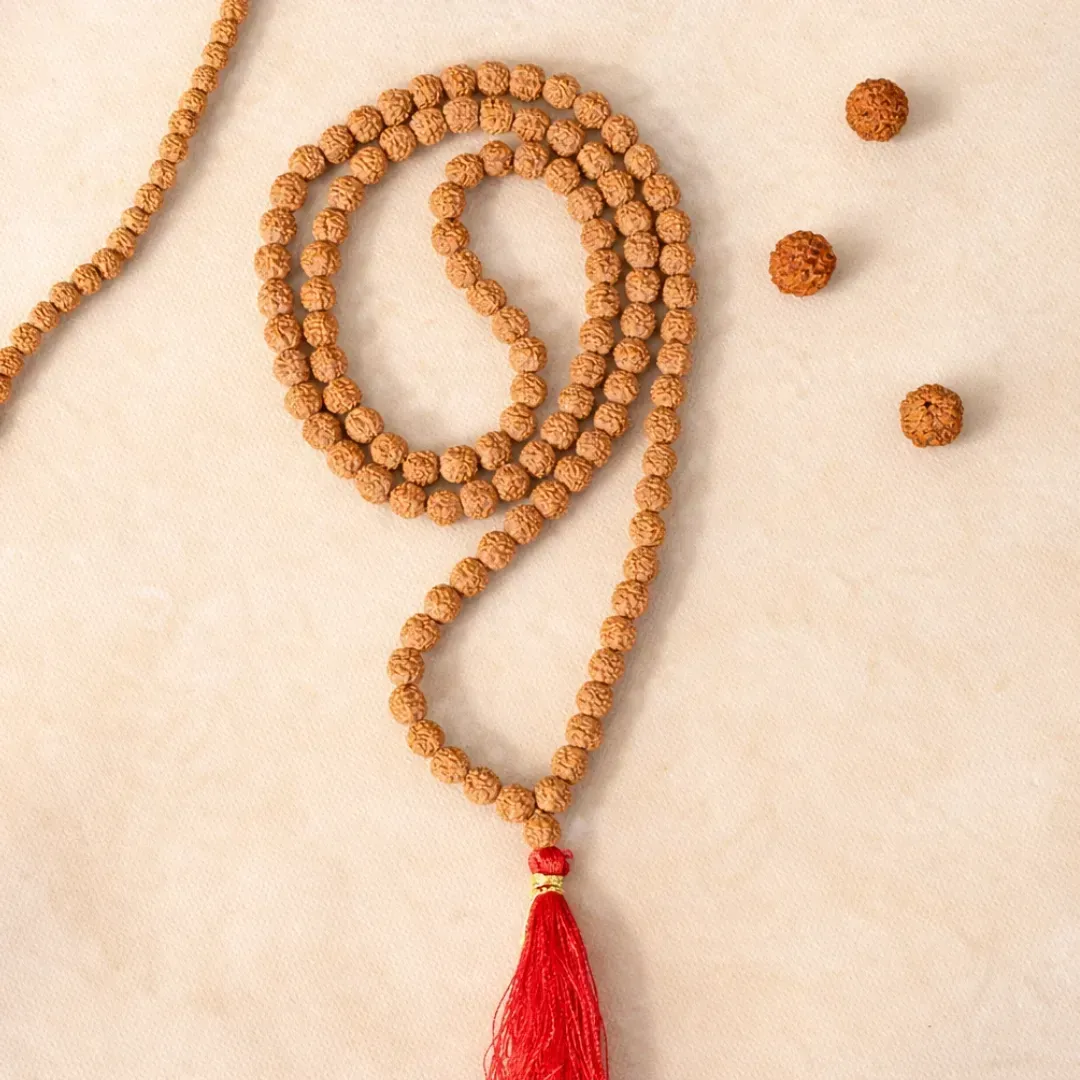
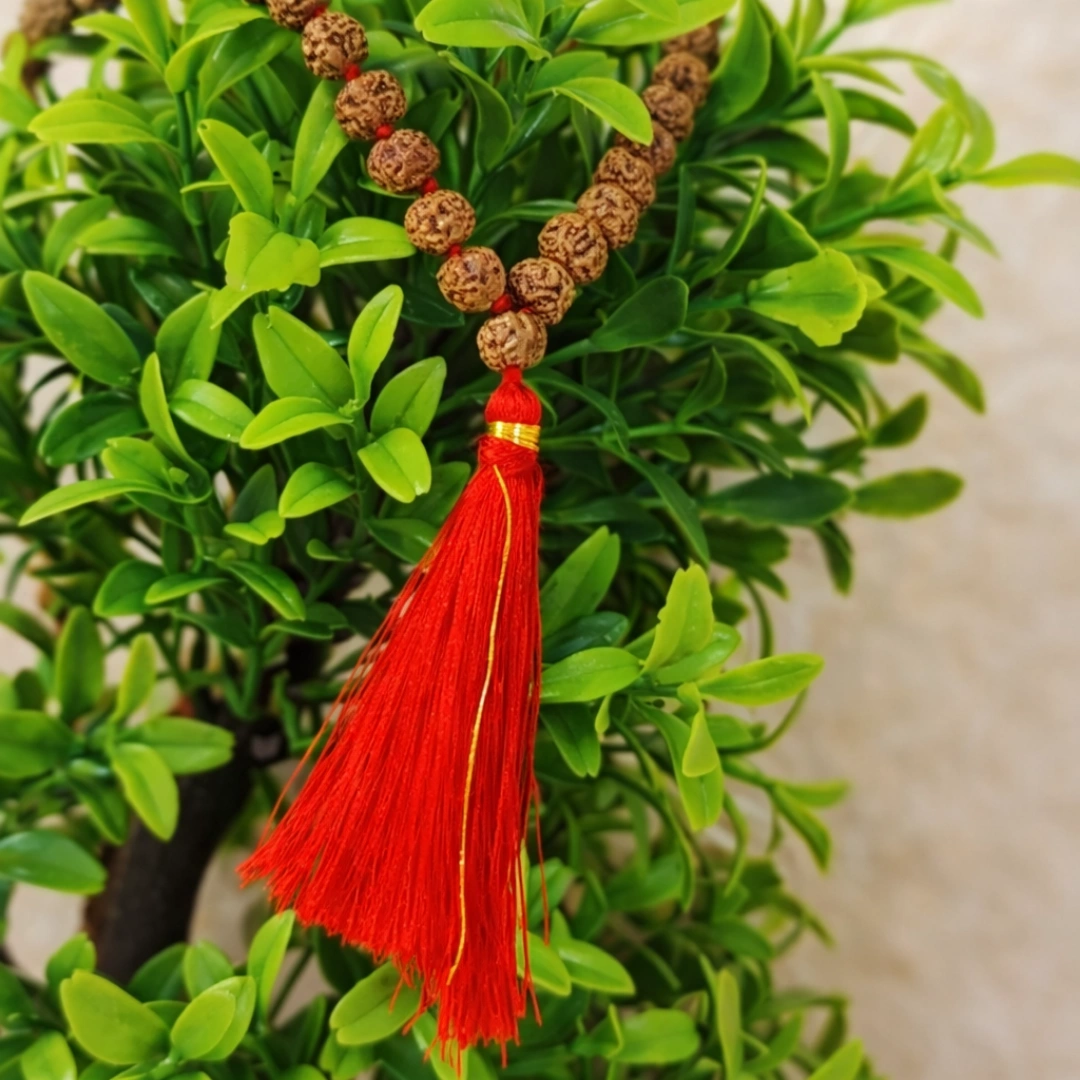
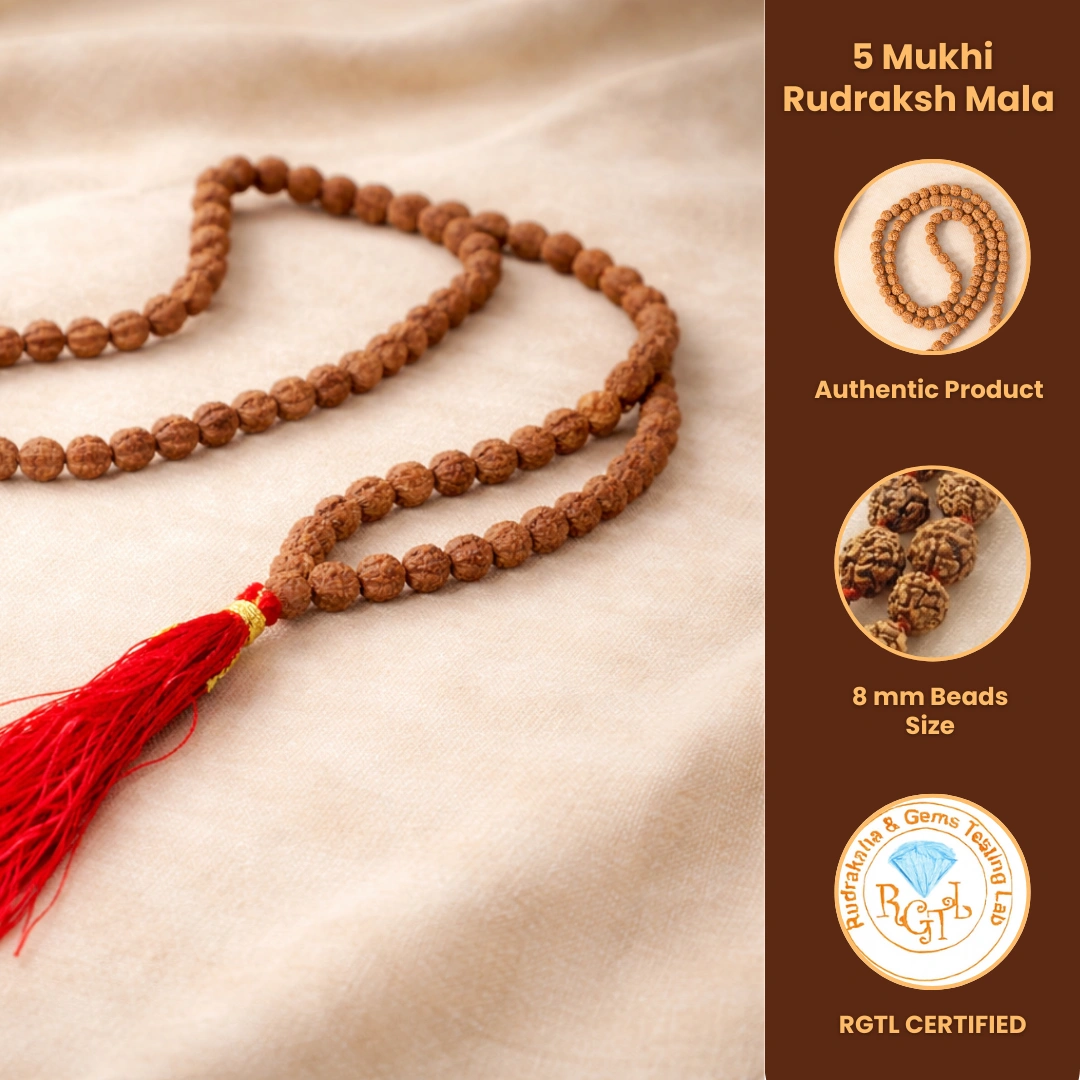
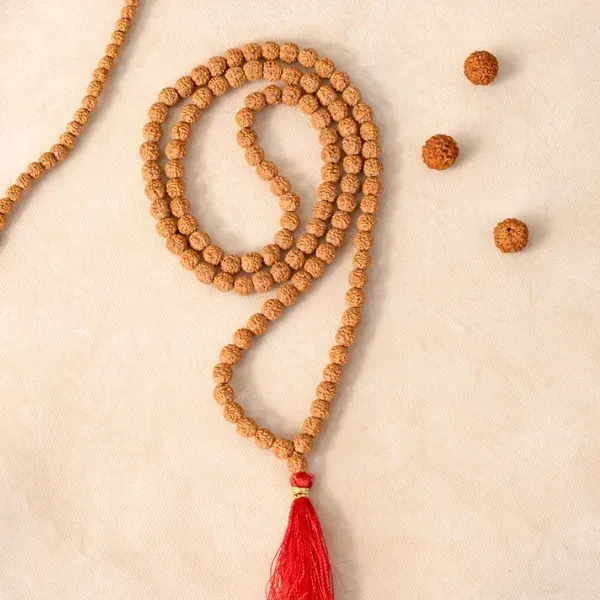
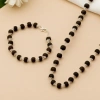
A Rudraksha mala. 108 beads. Brown. Simple.
Not because they cannot afford something fancier. Because this is what works.
Why 108 Beads — The Real Answer
Most people never think to ask this. They accept 108 because that is how it has always been. But there is actually a reason — several of them.
In Vedic mathematics, 108 is a Harshad number — perfectly divisible by the sum of its digits (1+0+8 = 9, and 108 ÷ 9 = 12). Ancient Indian mathematicians considered such numbers especially significant.
In astronomy, the diameter of the Sun is approximately 108 times the diameter of the Earth. The distance from the Earth to the Moon is approximately 108 times the Moon's diameter. These are not coincidences the ancient Vedic scholars missed — they built 108 into their spiritual systems deliberately, connecting the act of prayer to the structure of the cosmos.
In the human body, there are said to be 108 marma points — energy junctions that govern life force. Each bead of the mala corresponds to one of these points.
And the +1 — the Guru bead, the Sumeru? That is where you stop. You do not cross it. You turn the mala and start again. It represents the teacher, the divine, the boundary beyond which the student does not presume to go.
Every time you hold this mala, you hold something connecting you to all of this. Not just a string of beads — a system built across thousands of years.
Why 5 Mukhi — And Why Every Sage Chose This One
There are 14 types of Rudraksha, each with a different Mukhi, each governing a different planet. And yet — if you look at what sages, saints and spiritual teachers have worn for centuries — it is almost always the 5 Mukhi.
Not because the others are less powerful. Because the 5 Mukhi is the most universal.
It represents Lord Kalagni Rudra — the fierce, fire aspect of Shiva that burns away karma. The five faces correspond to the five elements: earth, water, fire, air and ether. The five aspects of Shiva himself: Sadyojaat, Aghora, Tatpurusha, Vamadeva and Ishana.
In Vedic astrology, it is governed by Jupiter — the planet of wisdom, knowledge and expansion. When Jupiter is strong in a chart, life flows with clarity and grace. When weak, there is confusion, poor judgement, lack of direction. The 5 Mukhi strengthens Jupiter's positive influence — and unlike most astrological remedies, it has no restrictions. No clash with any planet, any rashi, any nakshatra. Anyone can wear it.
The Shiva Purana says plainly: "A five-faced Rudraksha is Rudra himself. It is Kalagni. It destroys all sins."
That is not a small claim. And it is 5,000 years old.
Nepal vs Indonesian Rudraksha — Why This Mala Uses Nepal Origin
This is the question most sellers avoid. We will answer it honestly.
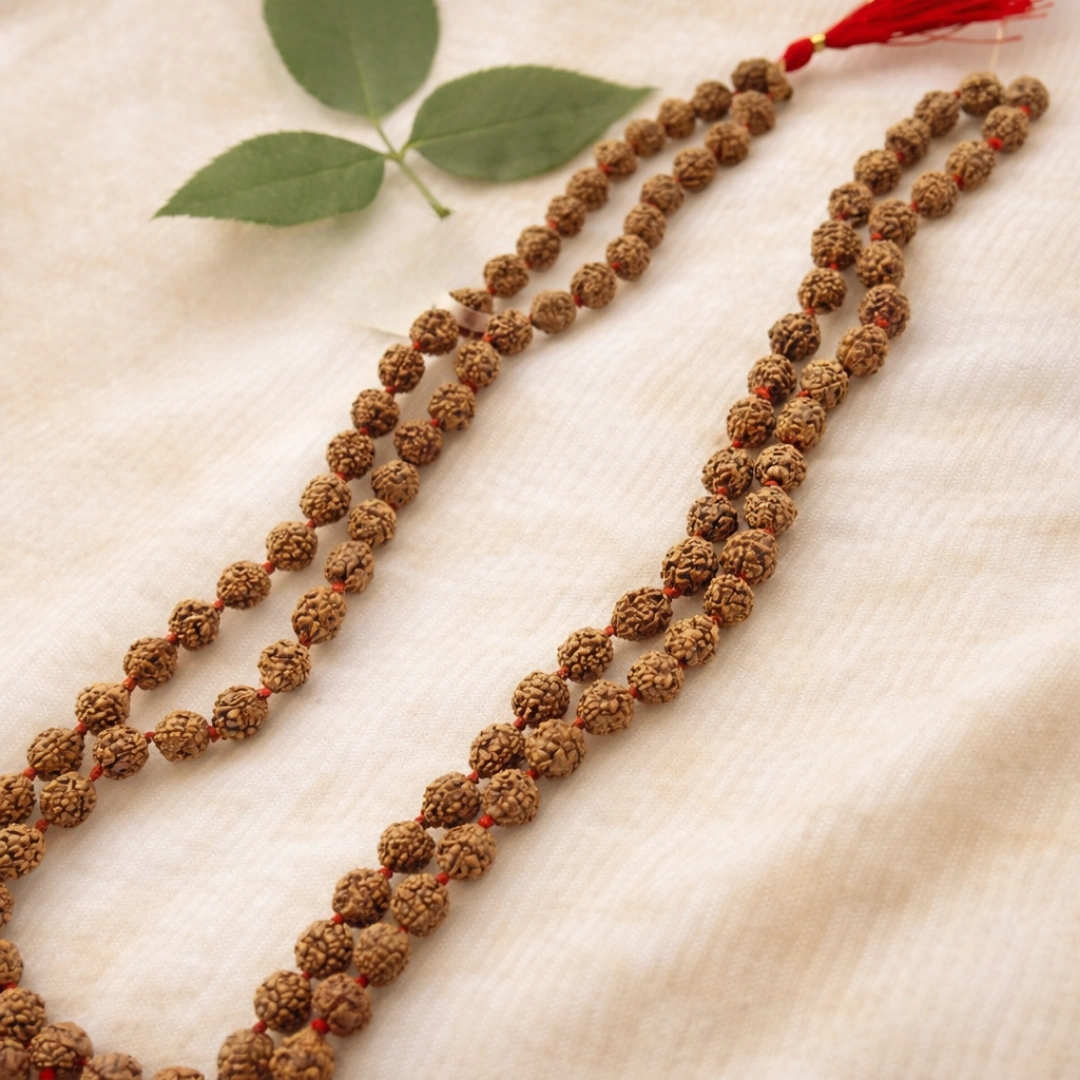
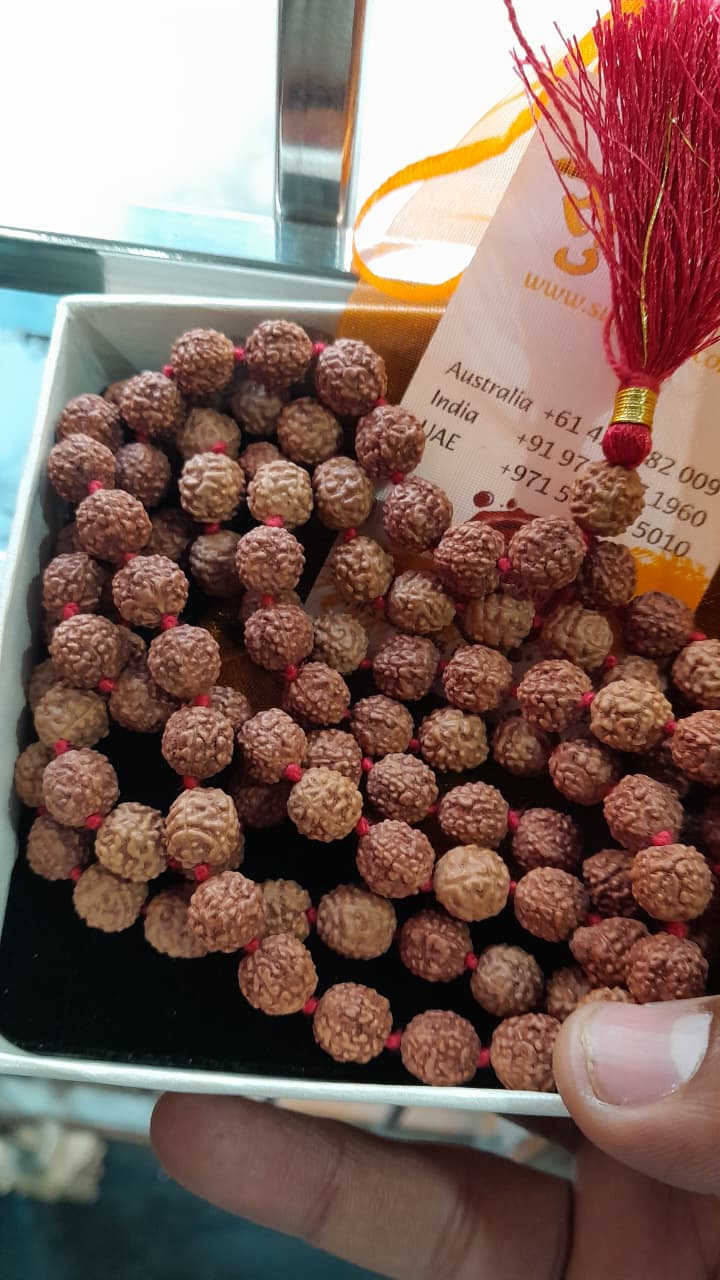
Nepali Rudraksha — larger beads, deeper Mukhi lines, more pronounced natural texture. Grown in the Himalayan region of Nepal, these are considered the strongest and most auspicious Rudraksha for astrological and spiritual use. The Mukhi lines are deeper, the surface more textured, and the energy more potent — according to both traditional knowledge and the experience of practitioners who have used both.
Indonesian Rudraksha (Java) — smaller beads, smoother surface, lighter. Genuine Rudraksha, but generally used for lighter malas, bracelets, and everyday wear where bead size needs to be smaller.
This mala uses Nepali Rudraksha — sourced from the Himalayan region and certified authentic. This is not a marketing claim — the certificate with this mala confirms Himalayan Nepali origin. If you are looking for a jap mala for serious daily practice or astrological benefit, Nepali Rudraksha is the right choice. And that is exactly what this mala carries.
Your First Jap Session — A Beginner's Complete Guide
If you have never done jap with a Rudraksha mala before, this section is for you. No complicated rituals. No pandit required. Just you, the mala, and ten minutes.
What you need: Just the mala and a quiet spot. That is genuinely all.
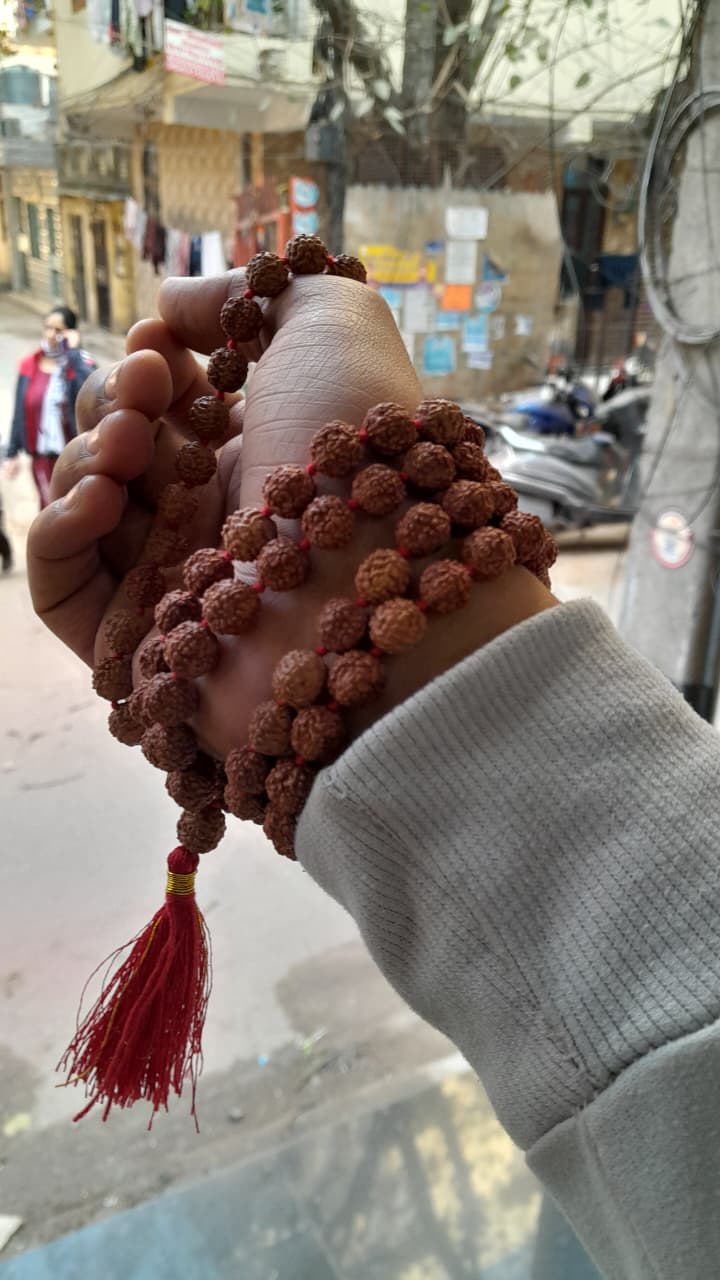
How to hold it: Right hand, between your thumb and middle finger. Never the index finger — tradition says the index finger represents ego, and you do not bring ego into this practice. Keep the mala inside a cloth bag (gomukhi) if you have one, or simply let it hang from your right hand.
Step 1: Sit comfortably. Cross-legged, on a chair, on the floor — whatever lets you sit still for 10 minutes without fidgeting. Face east if you can.
Step 2: Take three slow breaths. Let the mind settle from whatever it was doing before.
Step 3: Start at the bead just next to the Guru bead. Begin chanting — out loud or mentally, both work.
- "Om Namah Shivaya" — the most universal Shiva mantra, suitable for everyone
- "Om Hreem Namah" — the beej mantra specific to 5 Mukhi Rudraksha
Step 4: Move one bead with each repetition, using your thumb. Go slowly. There is no rush.
Step 5: When you reach the Guru bead — stop. Do not cross it. Turn the mala around and come back the same way. One complete round is 108 repetitions.
When your mind wanders: It will. That is not failure — that is the practice. The moment you notice your mind has gone somewhere else, gently bring it back to the mantra and the bead in your fingers. No judgment. Just return.
Best time: Early morning after bath is traditional. But any time you can do it consistently is better than the perfect time that never happens. Even five minutes every night before bed counts.
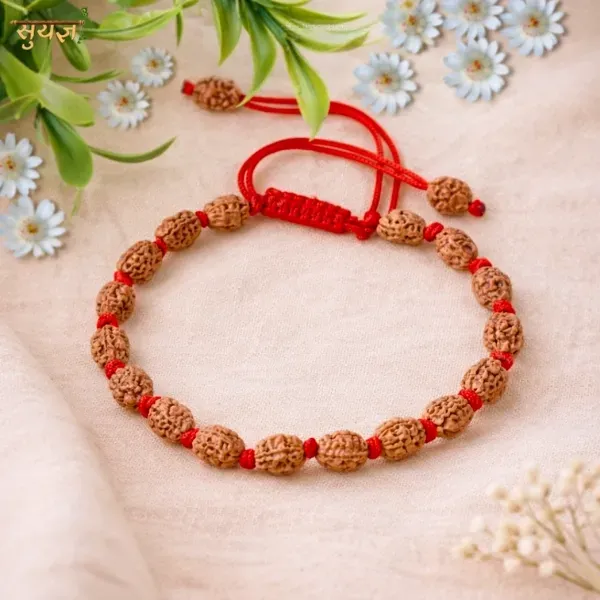
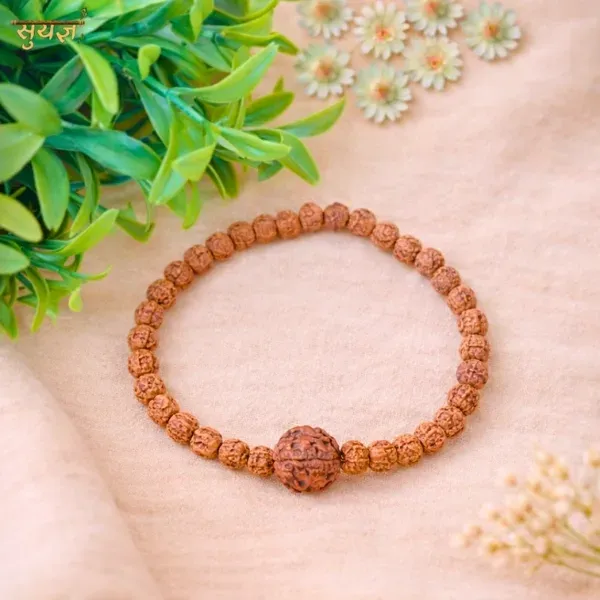
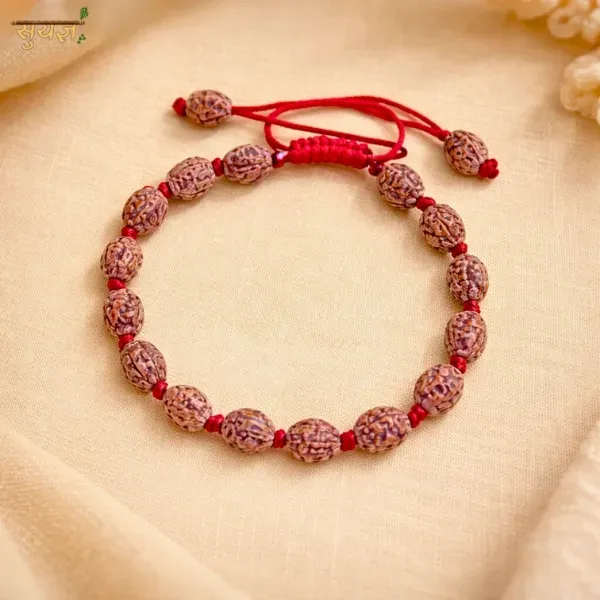
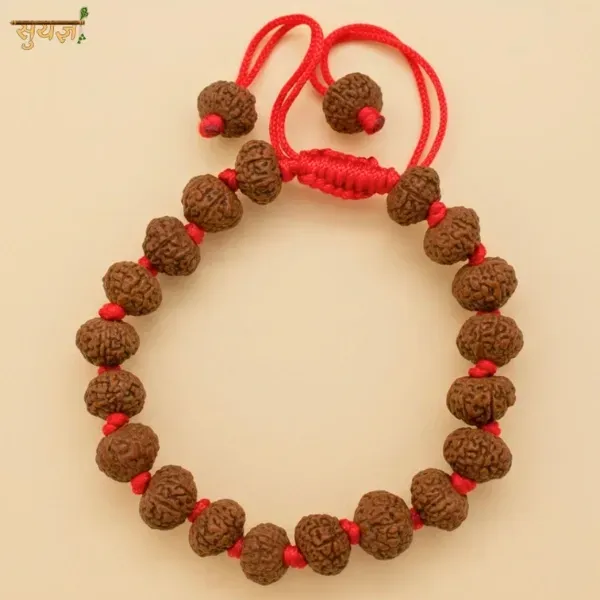
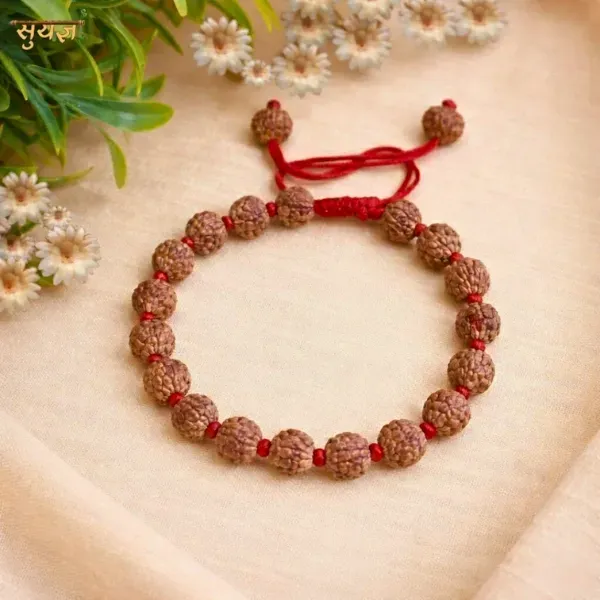
For daily wrist wear alongside your jap practice, explore the 5 Mukhi Rudraksha Bracelet at Suyagya. And for a more complete Rudraksha collection, browse the full Rudraksha Mala Collection.
Bead Size Guide — Which Size Is Right for You?
Choosing between bead sizes is a real decision that affects your daily practice. Here is an honest breakdown:
| Bead Size | Best For | Feel in Hand |
|---|---|---|
| 6–7mm (this mala) | Daily jap, long sessions, travel | Light, easy to move through quickly |
| 8mm | Daily jap + occasional wear | Medium weight, comfortable grip |
| 10mm+ | Slower, meditative jap; holding as pendant | Heavy, strong tactile feel per bead |
Recommendation for beginners: Start with 6–7mm. Lighter mala means your hands do not tire. You can complete a full round (108 repetitions) without your grip becoming the focus of your attention. As your practice deepens, you may want a heavier bead — but for starting out, lighter is better.
What Daily Jap Actually Does Over Time
Most people think of jap as religious obligation. That is one way to see it. Here is another.
Jap is focused repetition — something the nervous system responds to in very specific ways. The physical act of touching each bead grounds the mind in the present moment. The mantra gives it a single anchor. The count of 108 gives the practice a shape — a beginning, a middle, an end.
People who practice daily jap consistently report the same things:
- A quieter mind — less random thought, less background anxiety
- Better sleep, especially those who jap before bed
- Sharper focus that carries into the rest of the day
- A sense of not being alone — hard to describe, but real
None of this requires blind faith. It requires consistency. Ten minutes, every morning, same mala, same mantra. That is all.
Need guidance on which Rudraksha suits your kundali? Use Suyagya's Astro AI chatbot — enter your birth details and get a personalised Rudraksha recommendation based on your chart. Available directly on the Suyagya website.
— Team Suyagya "Suyagya hai, toh asli hi hoga."