


 Best Offers for You




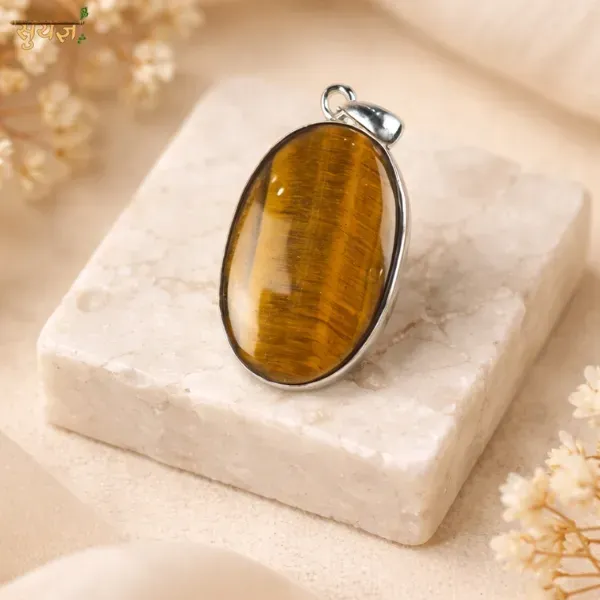
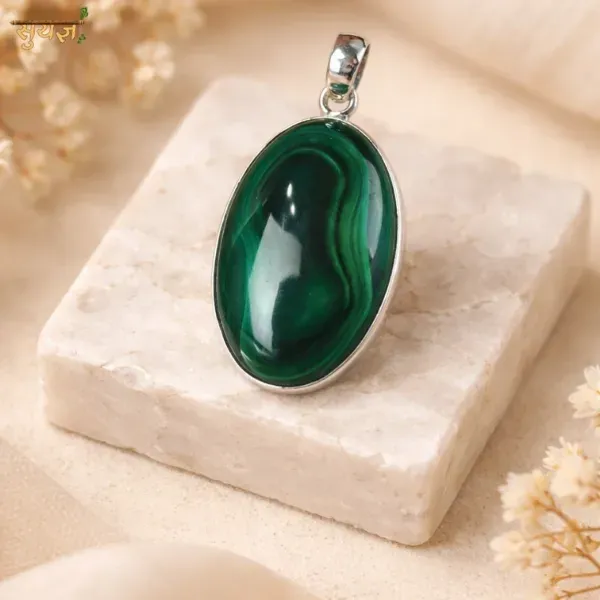
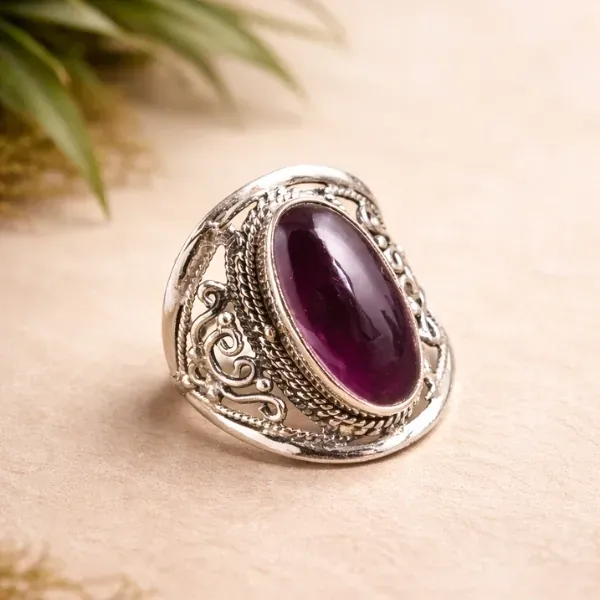









You have seen Tiger Eye. You have seen Hematite. You have seen Malachite.
You have probably not seen Pietersite.
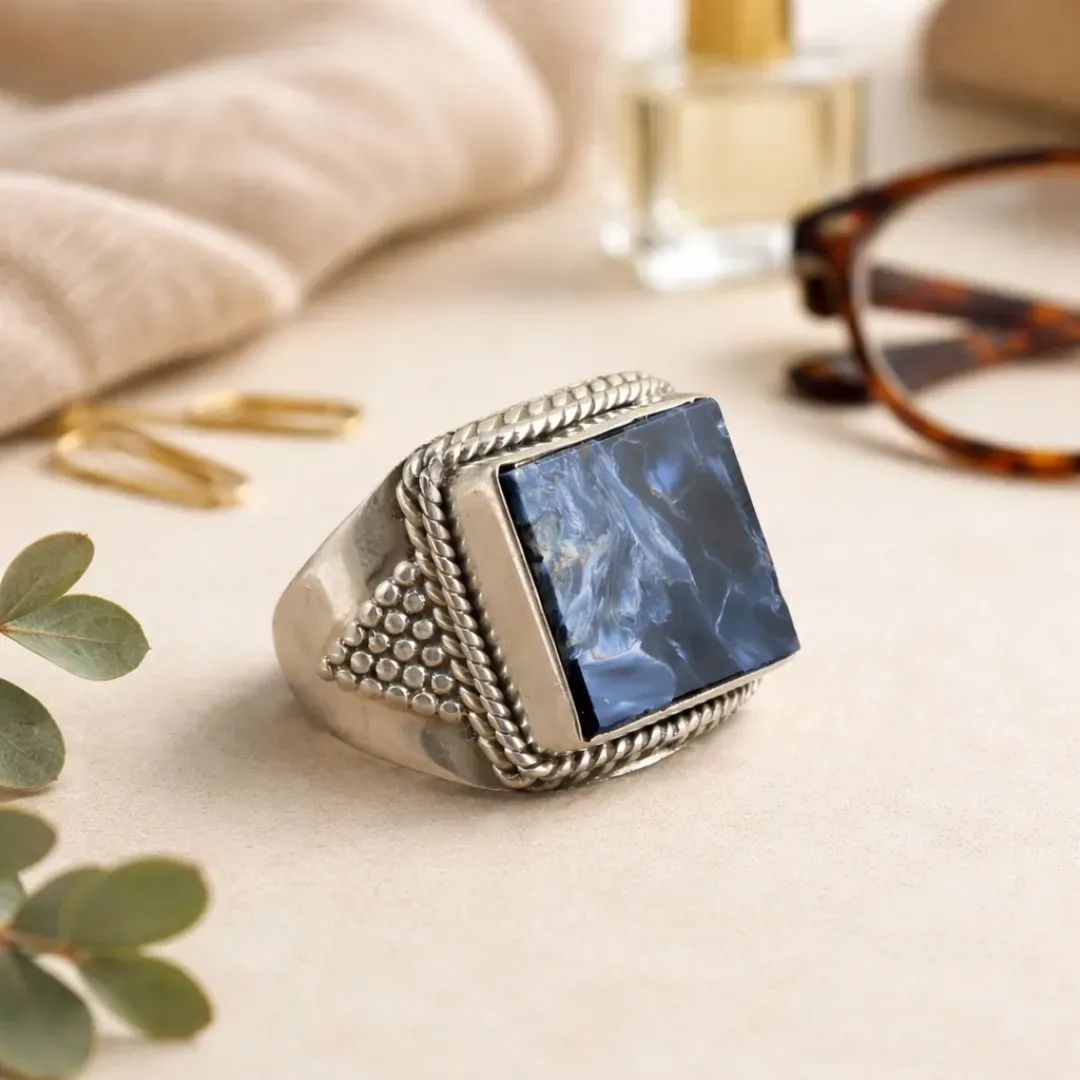
And that is exactly what makes this ring different from every other men's gemstone ring on the market.
What Is Pietersite — The Stone That Looks Like a Storm
Pietersite was discovered in 1962 by Sid Pieters, a farmer in Namibia. He found a stone that looked unlike anything documented before — swirling patterns of deep blue, gold, brown and grey, with a silky chatoyancy that made the surface appear to move as light hit it from different angles.
He sent samples to the Gemological Institute. They confirmed it was a new variety of quartz — specifically, a brecciated form of Tiger Eye and Hawk's Eye that had been fractured and naturally recemented by silica over millions of years. The fracturing and re-cementation is what creates the swirling, storm-like patterns.
It is found in only two places in the world — Namibia and Hunan province in China. Global annual production is extremely limited. It is not a stone you will find in every jewellery shop.
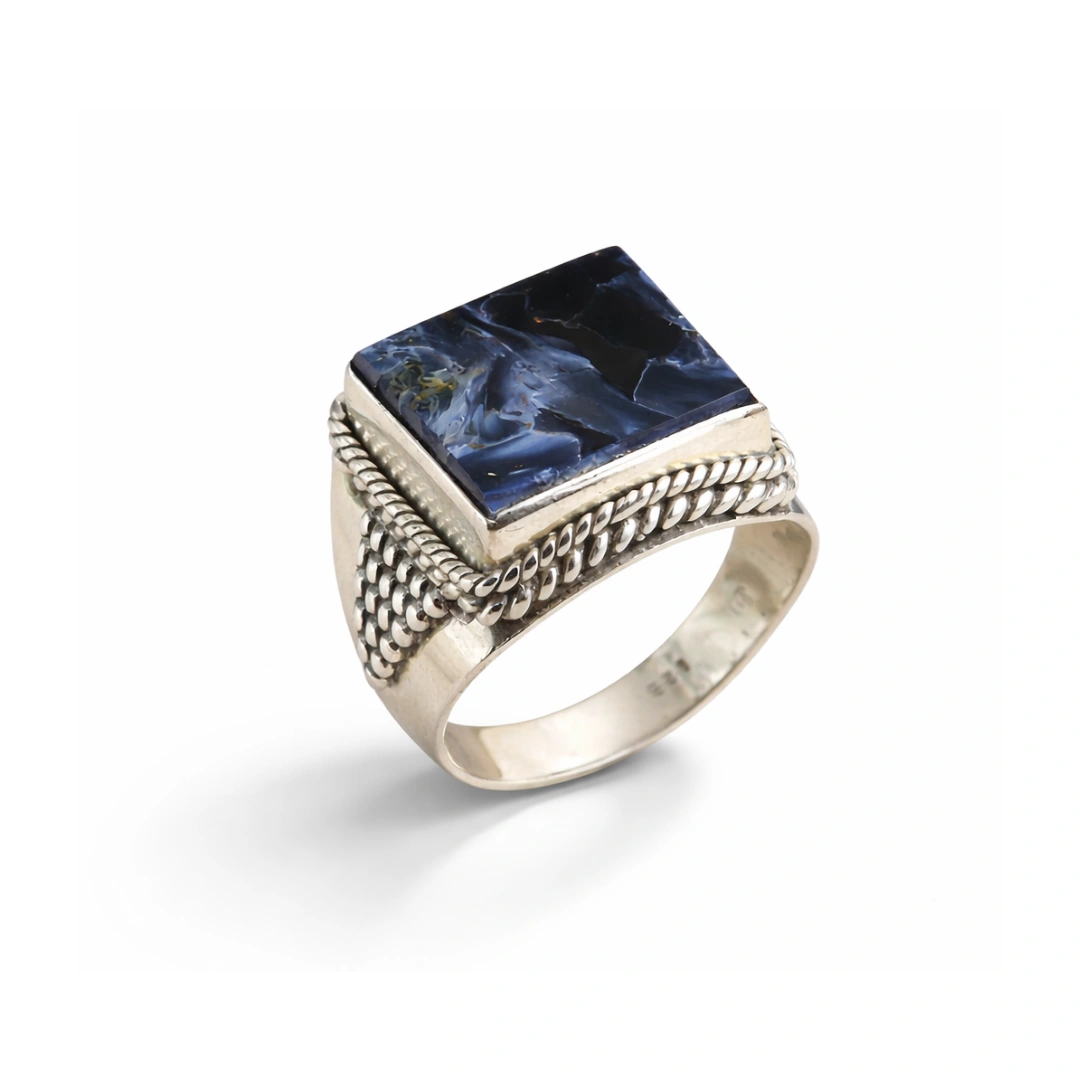
The name "Tempest Stone" came naturally — it looks like a storm captured in mineral form. Blue lightning across a dark sky. Clouds shifting in grey and silver. Occasionally a streak of gold where Tiger Eye material was caught in the matrix.
Every piece of Pietersite looks different. Because every piece formed differently — the fractures happened at different points, the silica filled in at different angles, the mineral inclusions settled in different patterns.
This is not a stone that was cut and polished to look a certain way. It looks the way it looks because of what it went through.
Chatoyancy — Why This Stone Appears to Move
Chatoyancy is the optical effect that makes certain stones appear to have a band of light moving across their surface — like a cat's eye in low light.
In Pietersite, the chatoyancy is more complex than in Tiger Eye because the fibrous material runs in multiple directions — the result of the brecciation. Instead of one moving band of light, Pietersite shows shifting planes of shimmer across the entire stone surface.
In person, this effect is impossible to ignore. As you move your hand, the stone shifts — the blue deepens, the grey lightens, the golden streaks catch and release light. It looks alive in a way that most stones simply do not.
Photographs capture some of it. Real life captures all of it.
The Signet Ring — 5,000 Years of Meaning on One Finger
The signet ring is the oldest form of ring with recorded history. Ancient Egyptians used them as personal seals — pressed into wax to authenticate documents. Mesopotamian kings wore them as symbols of authority. Roman emperors sealed decrees with them. Medieval knights wore them into battle.
The signet ring was never decorative jewellery. It was functional, intentional, and deeply personal. A signet ring told the world — this belongs to someone. This person has weight.
The square format of a signet ring — flat stone, strong shoulders, substantial band — carries that history in its shape. It sits on the finger with presence. It reads as intentional from across a room.
Setting a rare natural Pietersite in a signet format is not an accident. A rare stone deserves a setting with history. A setting with history deserves a stone that can hold its own.
This ring does both.
The Handcrafted Band — Why It Looks Different From Every Other Silver Ring
The band of this ring features rope-twist detailing along the shoulders and dotwork on the setting frame — both classic silversmithing techniques done by hand.
Rope-twist — twisted silver wire soldered along the edge of the ring — is a technique that goes back thousands of years across Indian, Mughal and Roman silverwork. It adds visual texture and weight to the ring without adding bulk. The slight irregularity of handwork makes each piece subtly different.
The dotwork framing the stone — small silver spheres arranged around the bezel — is a granulation technique. Like rope-twist, it is labour-intensive and cannot be perfectly replicated by machine.
The result is a ring that looks considered, not manufactured. Worn, it develops its own character — the silver picks up slight patina in the detailed areas over time, deepening the antique quality.
Pietersite Energy — The Stone of Transformation
In crystal tradition, Pietersite is called the Tempest Stone — and its energy matches its appearance.
Where Hematite grounds you to earth, Pietersite moves you through storms. It is the stone for people in transition — changing careers, changing cities, changing relationships, changing themselves. The turbulence that Pietersite represents is not destructive — it is the turbulence of transformation, the kind that clears old patterns and creates space for new ones.
It is associated with the Third Eye and Solar Plexus chakras — clarity of inner vision combined with the willpower to act on it. For men specifically, this combination of clear seeing and decisive action is deeply relevant.
It is also strongly grounding despite its stormy appearance — it keeps the wearer anchored in the present moment even as things around them shift.
Explore the complete jewellery collection at Suyagya for more handcrafted pieces.
— Team Suyagya "Suyagya hai, toh asli hi hoga."