 Best Offers for You










Most men's jewellery plays it safe.
Plain bands. Minimal settings. Stones so small they are almost invisible. The unspoken rule in men's jewellery has always been: do not stand out too much.
This ring does not follow that rule.
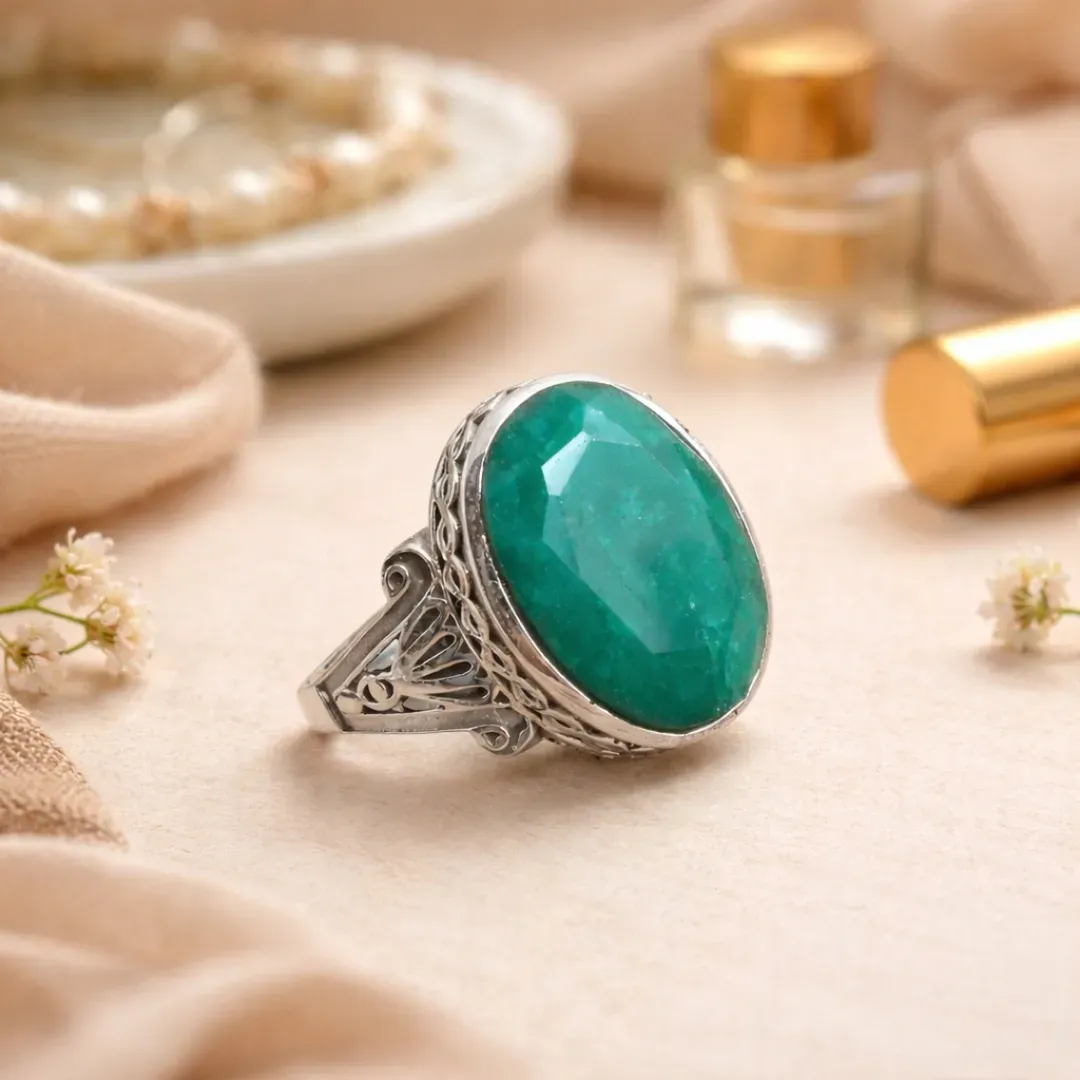
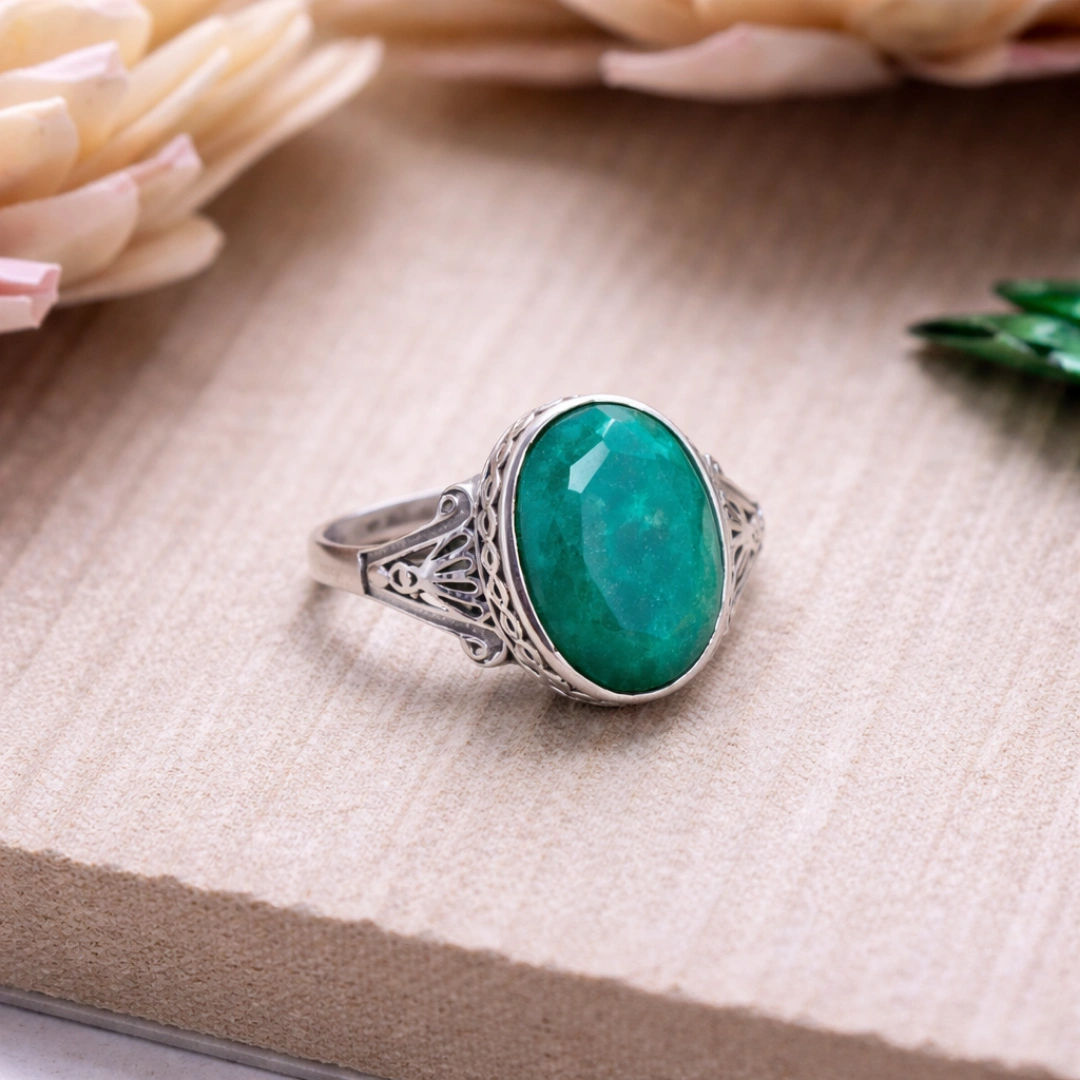
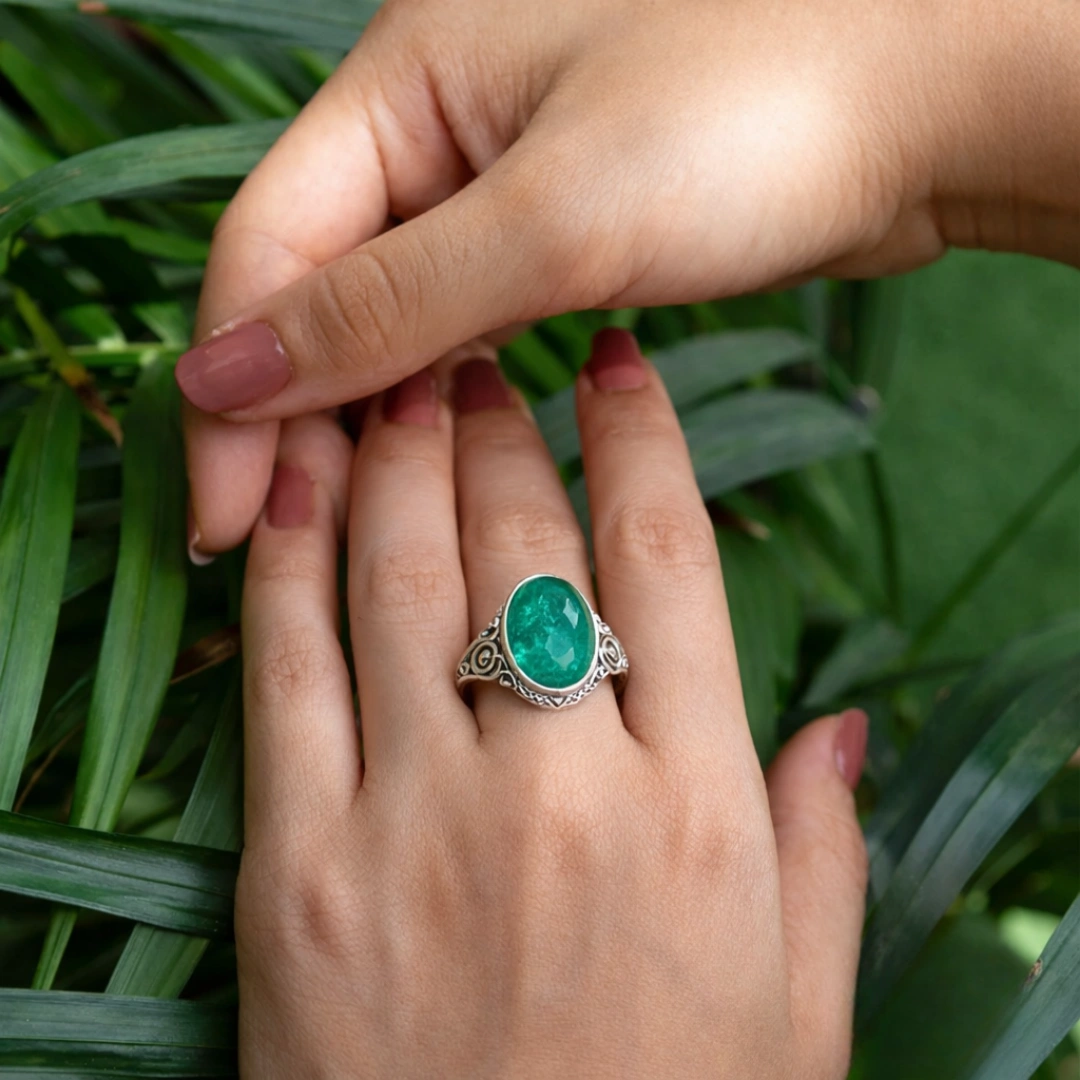
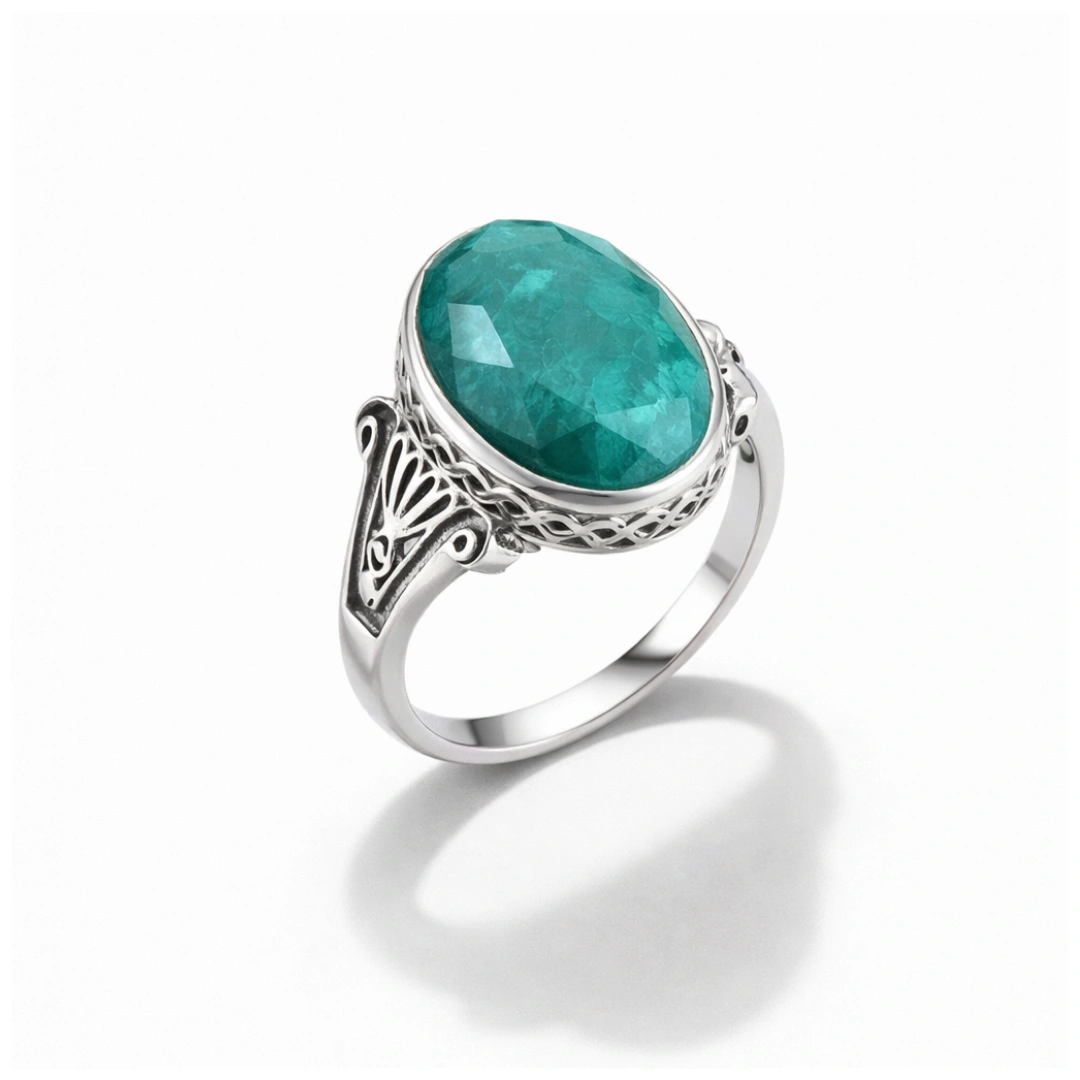
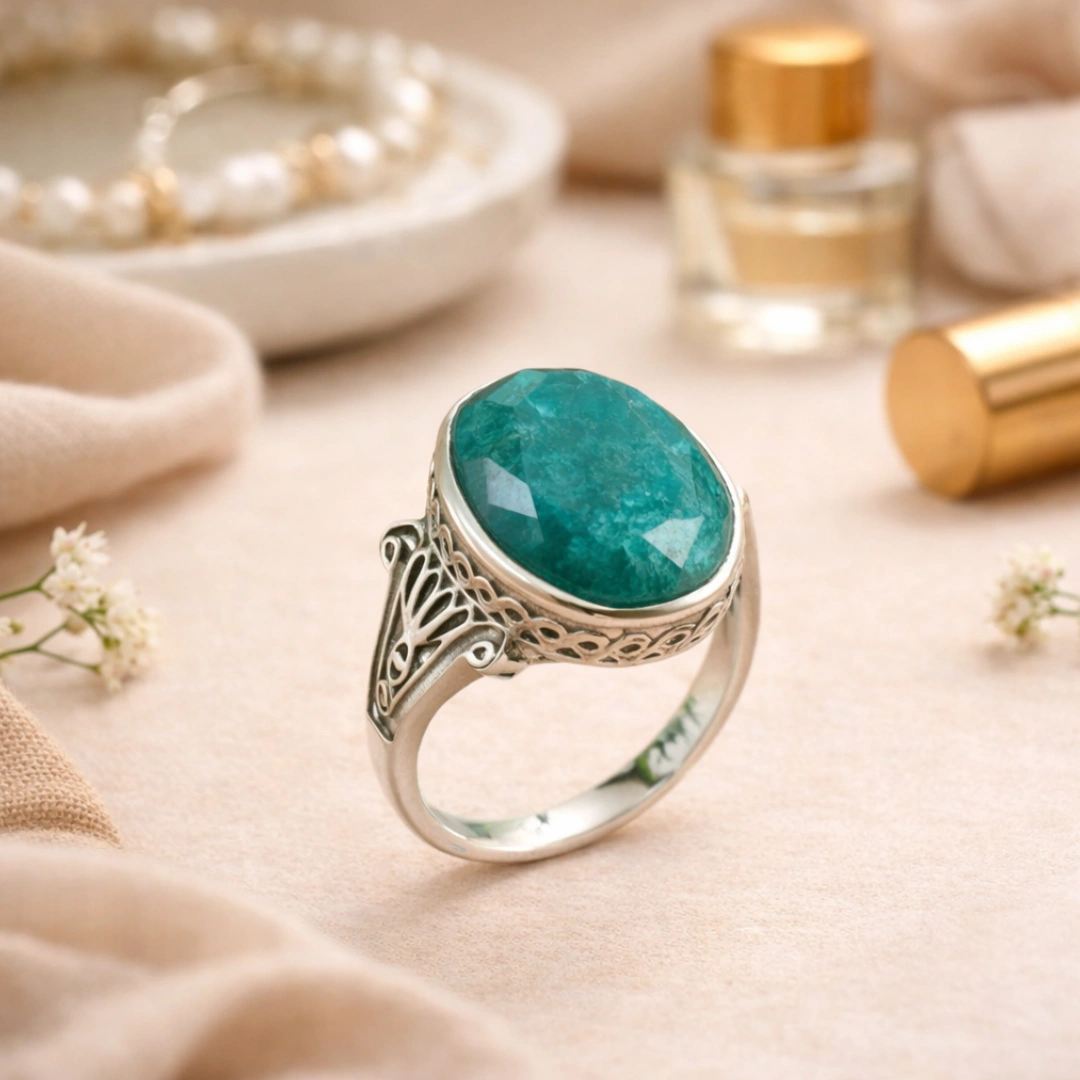
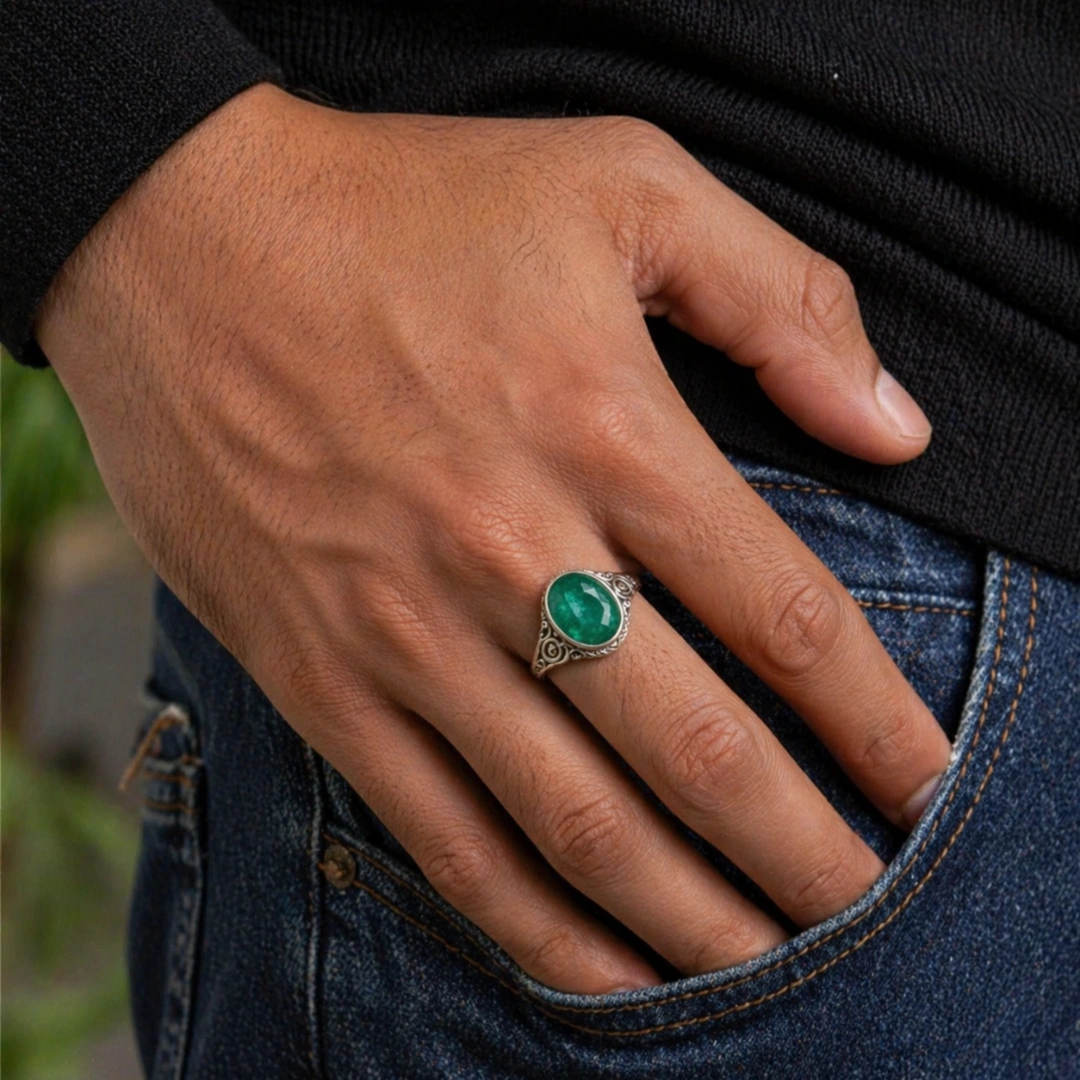
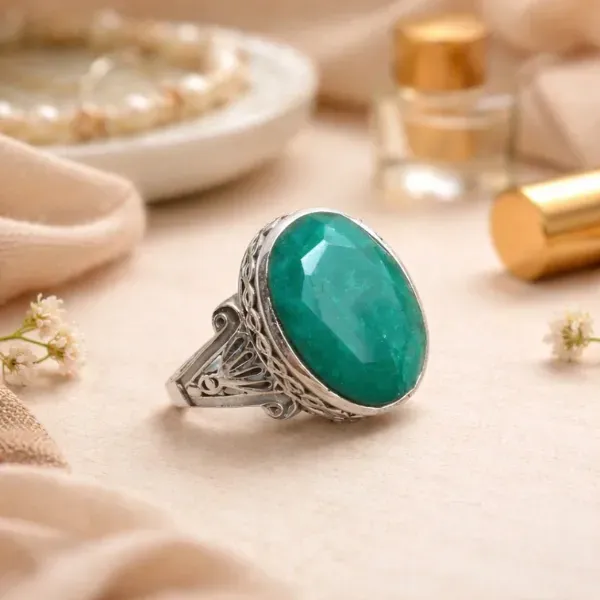
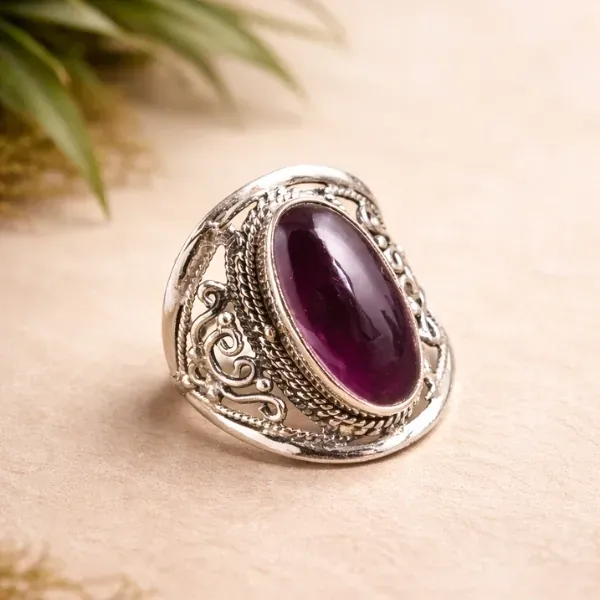
A large natural emerald in an antique filigree silver setting — it is bold without being loud, intricate without being fussy. It is the kind of ring that men who actually know jewellery recognise immediately. And the kind of ring that everyone else simply notices.
Emerald — The Stone That Has Always Belonged on a Man's Hand
Before emerald became a bridal stone, before it became associated with romance and femininity — it was a warrior's stone, a king's stone, a stone of power and clarity.
Ancient Egypt — Cleopatra famously claimed the emerald mines of Egypt. But long before her, Egyptian pharaohs wore emerald as a stone of protection and eternal youth. It was placed in burial chambers as a symbol of rebirth.
Ancient Rome — Roman soldiers carried emerald into battle. The belief was that emerald sharpened vision — literally and metaphorically. It was thought to improve eyesight and to give the wearer clearer judgment in moments of high pressure.
Mughal India — the Mughal emperors had an obsession with emerald. Shah Jahan — the same emperor who built the Taj Mahal — had Quranic verses engraved on large emeralds and wore them as protective talismans. The famous Mughal emeralds are among the most prized gemstones in the world. For the Mughals, emerald was not jewellery. It was power.
In every culture that valued emerald, it was worn by men of consequence — by people who made decisions, led others, and needed clarity of mind to do it.
Mercury (Budh) — The Vedic Significance of Emerald
In Vedic astrology, emerald is the gemstone of Mercury — Budh Grah.
Mercury governs: intelligence, communication, analytical thinking, business acumen, writing, speech, and the ability to process complex information quickly. When Mercury is strong in a birth chart — the person thinks clearly, communicates effectively, succeeds in business and intellectual work. When Mercury is weak or afflicted — scattered thinking, poor judgment, communication failures, business obstacles.
Emerald — Panna in Hindi — is the primary Vedic remedy for strengthening Mercury. It is recommended for:
Gemini (Mithun) and Virgo (Kanya) rashi — both ruled by Mercury, primary beneficiaries Anyone with weak Mercury showing as poor communication, business struggles, scattered focus Students and professionals in communication, finance, law, business, technology Those in Mercury Mahadasha or Antardasha — emerald amplifies Mercury's positive energy during its period
The oval cabochon cut in this ring maximises the stone's surface area in contact with the skin — important in Vedic gemology, where direct skin contact is considered essential for a gemstone's energy to work effectively.
The Antique Filigree Setting — Why It Matters
Filigree is an ancient silversmithing technique — fine silver wire twisted and woven into intricate patterns, then soldered into place. It originated in ancient Egypt and Mesopotamia, spread through the Mughal courts of India, and remains one of the most labour-intensive forms of metalwork in existence.
The filigree setting on this ring is not stamped, not machine-made, not replicated by a press. It is handcrafted — each scroll and curl done by an Indian craftsman who learned the technique through years of apprenticeship.
What this means practically: no two rings are exactly identical. The stone setting, the band patterns, the oxidisation that gives the silver its antique depth — all vary slightly from piece to piece. This is not inconsistency. This is craft.
The oxidised silver finish — darker in the recessed areas, brighter on the raised surfaces — creates a three-dimensional quality that polished silver cannot replicate. It makes the filigree patterns visible and gives the ring its unmistakably ancient, considered look.
This is not the kind of ring that came off a production line. You will be able to tell.
Natural vs Lab-Created Emerald — Why It Matters at This Price
Most emerald rings in this price range use lab-created emeralds — chemically identical to natural emerald but grown in a controlled environment in weeks rather than millions of years.
This ring uses 100% natural emerald.
Natural emerald forms deep in the earth under specific geological conditions — chromium and vanadium giving it its distinctive deep green. Each natural emerald has inclusions — internal characteristics called "jardin" (French for garden) — that are evidence of its natural formation. No two natural emeralds look exactly alike.
In Vedic astrology, only natural gemstones are considered effective as remedies — lab-created stones carry no planetary energy. If you are wearing this ring for Mercury's astrological benefits, natural emerald is non-negotiable.
If you are wearing it purely for aesthetics — natural emerald still looks different from lab-created. The depth, the slight variation in colour, the inclusions that catch light differently — these are qualities that cannot be manufactured.
Who This Ring Is For
The man who wears intention, not trend. Who chooses a ring because it means something — not because it is on sale or because everyone else has one.
The man who knows his birth chart and understands that emerald on Mercury's finger is not superstition — it is a thousand years of consistent recommendation across Vedic tradition.
The man who appreciates craft — who can look at a filigree setting and understand the work that went into it.
The professional whose success depends on clarity of thinking, sharpness of communication, and the ability to make good decisions under pressure — and who wants a stone on his hand that supports exactly that.
Explore the complete jewellery collection at Suyagya for more handcrafted pieces. For daily spiritual practice alongside your ring — the 5 Mukhi Rudraksha Jaap Mala pairs naturally.
— Team Suyagya "Suyagya hai, toh asli hi hoga."